
Medicines
SmPC of 12/06/2023
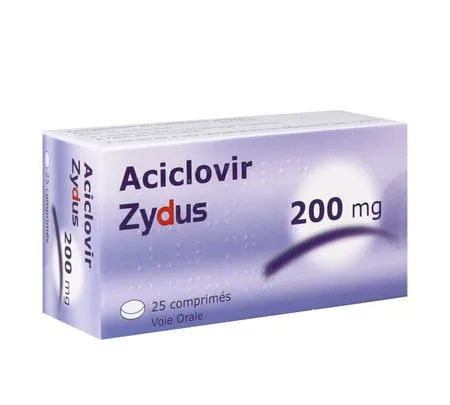
ACICLOVIR ZYDUS 200 mg, tablet
Composition
Aciclovir.........................................................................................................................................................200 mg
For one tablet.
Microcrystalline cellulose, sodium starch glycolate, povidone K25, magnesium stearate, anhydrous colloidal silica.
Indications
• Prevention of virus infections Herpes simplex in immunocompromised subjects.
• In immunocompetent subjects:
Skin or mucosal infections:
Treatment of severe cutaneous or mucosal herpetic infections (excluding neonatal herpes and severe herpetic infections in immunocompromised children), (these are generally primary infections), in particular genital herpes and acute herpetic gingivostomatitis.
Due to its mode of action, aciclovir does not eradicate latent viruses. After treatment, the patient will therefore remain exposed to the same frequency of recurrences as before.
Treatment of recurrences of genital herpes.
Prevention of infections due to Herpes Simplex Virus, in subjects suffering from at least 6 recurrences per year.
Ophthalmological infections:
• Prevention of recurrent HSV ocular infections:
• epithelial keratitis after 3 recurrences per year or in the presence of a known trigger factor,
• stromal keratitis and keratouveitis after 2 recurrences per year.
• in case of eye surgery.
Treatment of HSV keratitis and keratouveitis.
Dosage and administration
Dosage
Reserved for adults and children over 6 years.
In immunocompromised subjects:
• Prevention of infections caused by Virus Herpes simplex in immunocompromised subjects: 4 tablets per day, to be taken at regular intervals, throughout the period of immunosuppression during which antiherpetic prophylaxis is desired.
In immunocompetent subjects:
Skin or mucosal infections:
• Treatment of severe cutaneous or mucosal herpetic infections: 5 tablets per day, to be taken at regular intervals, for 5 to 10 days.
• Treatment of recurrences of genital herpes: 5 tablets per day, to be taken at regular intervals, for 5 days. Treatment should be started as early as possible, as soon as symptoms appear.
• Prevention of infections caused by Virus Herpes simplex, in subjects suffering from at least 6 recurrences per year: 4 tablets per day, divided into 2 doses. The treatment will be reassessed at time intervals of 6 to 12 months, in order to evaluate any possible change related to the natural course of the disease.
Ophthalmological infections:
Prevention of recurrences of ocular HSV infections:
• Epithelial keratitis after 3 recurrences per year, stromal keratitis and keratouveitis after 2 recurrences per year: 4 tablets at 200 mg per day, divided into 2 doses. The treatment will be reassessed at time intervals of 6 to 12 months, in order to evaluate any possible change related to the natural course of the disease.
• In case of eye surgery: 4 tablets at 200 mg per day, divided into 2 doses.
• Treatment of HSV ocular infections:
• Keratitis and keratouveitis: 10 tablets at 200 mg per day, divided into 5 doses.
Treatment should be initiated as soon as possible after the onset of an infection. In the case of recurrent episodes, treatment initiation should preferably take place during the prodromal phase or upon the appearance of the first lesions.
In patients with renal impairment
Caution is recommended when administering aciclovir to patients with impaired renal function. Adequate fluid intake must be ensured.
For the management of infections with Herpes simplex in patients with severe renal impairment (creatinine clearance < 10 mL/min), dose adjustment is recommended to 200 mg of aciclovir 2 times per day with an interval of approximately 12 hours between doses.
In elderly patients
The possibility of renal impairment in elderly patients must be taken into account and the dose will be adjusted according to creatinine clearance (see section "In patients with renal impairment").
Adequate fluid intake must be ensured in patients taking high oral doses of aciclovir.
In children
In children over 6 years, the dosage is the same as in adults.
Method of administration
Not applicable.
Contraindications
Aciclovir tablets, suspensions and powders for solution for injection (IV) are contraindicated in patients with known hypersensitivity to aciclovir, valaciclovir or any of the excipients.
Warnings and precautions
The diagnosis of primary herpetic infection is a clinical probability diagnosis.
Hydration status of the patient: adequate fluid intake must be ensured for patients at risk of dehydration, in particular elderly persons, as well as in patients receiving aciclovir intravenously or high oral doses of aciclovir.
Patients with renal impairment and elderly patients: as aciclovir is eliminated via the kidneys, the dose must be adjusted according to creatinine clearance (see section Dosage and administration).
Elderly patients are likely to have reduced renal function and therefore a dose reduction of aciclovir should be considered in these patients.
Concomitant use of other nephrotoxic medicinal products increases the risk of renal impairment.
Neurological disorders (see section Adverse effects) are likely to occur more frequently in patients with renal impairment and in elderly patients whose renal function is potentially reduced.
Elderly and/or renally impaired patients must be closely monitored in order to identify these neurological adverse reactions, which are generally reversible after discontinuation of treatment (see section Adverse effects).
Prolonged treatment or repeated administrations of aciclovir in severely immunocompromised patients may lead to the selection of virus strains with reduced sensitivity to aciclovir, which may result in no response to continued aciclovir treatment (see section Pharmacodynamics).
The occurrence of renal pain should prompt consideration of renal impairment and discontinuation of treatment.
Do not give to the child before 6 years of age, because of the risk of aspiration.
Interactions
Associations to be taken into account
• Other nephrotoxic medicinal products
Risk of increased nephrotoxicity
Concomitant use of medicinal products with intrinsic renal toxicity increases the risk of nephrotoxicity. If such a combination is necessary, biological monitoring of renal function must be reinforced.
Aciclovir is eliminated mainly unchanged in the urine by active renal tubular secretion.
Any medicinal product administered simultaneously that competes for this mechanism may increase the plasma concentrations of aciclovir.
Probenecid and cimetidine increase the AUC of aciclovir through this mechanism and reduce the renal clearance of aciclovir.
Similarly, increases in the plasma AUCs of aciclovir and of the inactive metabolite of mycophenolate mofetil, an immunosuppressive agent used in transplant patients, have been observed when these medicinal products are co-administered.
However, no dose adjustment is necessary because of the wide therapeutic index of aciclovir.
Increases of about 50% in the AUC of total theophylline administered were shown in a clinical study conducted in 5 male subjects during concomitant administration of aciclovir. Determination of plasma concentrations is recommended when co-administered with aciclovir.
Fertility, pregnancy and breastfeeding
Pregnancy
Studies performed in animals have demonstrated a teratogenic effect in a single species and at very high dosage.
A post-marketing pregnancy registry documented pregnancy outcomes of women exposed to aciclovir (regardless of the form used). Registry data did not show an increase in the number of malformations in women exposed to aciclovir compared with the general population, and no malformation showed an exceptional or recurrent character suggesting a common cause.
However, only epidemiological studies would allow verification of the absence of risk.
In standard internationally recognised tests, systemic administration of aciclovir did not show teratogenic or embryotoxic effects in rabbits, rats or mice. In non-standardised tests in rats, fetal abnormalities were observed but only following high subcutaneous doses causing maternal toxicity. The clinical relevance of these results is unknown.
Use of aciclovir during pregnancy should only be considered if the expected benefits outweigh the potential risks incurred.
No study permits administration of aciclovir in recurrent genital herpes in pregnant women, particularly at the end of pregnancy.
Breast-feeding
Following oral administration of 200 mg of aciclovir five times daily, aciclovir was detected in breast milk at concentrations ranging from 0,6 to 4,1 times the corresponding plasma levels. These concentrations could potentially expose breastfed infants to aciclovir doses of up to 0,3 mg/kg/day. Caution is therefore advised when aciclovir is administered to women who are breastfeeding.
In severe conditions requiring maternal systemic treatment, breastfeeding must be avoided. In other cases, where possible, preference should be given to topical treatment, with which breastfeeding is possible.
Fertility
See clinical studies.
Driving and using machines
The patient's clinical condition and the profile of neuropsychiatric adverse reactions to aciclovir must be taken into account when considering the patient's ability to drive vehicles and use machines.
No studies have been performed to evaluate the effects of aciclovir on the ability to drive vehicles or use machines
Adverse effects
The frequency categories assigned to the adverse reactions below were established on the basis of clinical trial data to classify adverse reactions, bearing in mind that this incidence may vary depending on the indication.
The frequency of other adverse reactions could not be estimated from spontaneous reports due to the absence of appropriate data for calculating their frequency.
The following convention has been used for classifying adverse effects according to their frequency:
Very common (≥ 1/10), common (≥ 1/100 and < 1/10), uncommon (≥ 1/1000 and < 1/100), rare (≥ 1/10000 and < 1/1000), very rare (< 1/10000).
Blood and lymphatic system disorders
Frequency not known: thrombocytopenia, leukopenia.
Immune system disorders
Frequency not known: anaphylactic reactions.
Nervous system disorders
Very common: Headaches.
Common: Dizziness.
Disturbances of balance, ataxia and dysarthria may be associated or occur in isolation and indicate a cerebellar syndrome.
Sometimes severe neurological disturbances that may present as an encephalopathy picture and include confusion, agitation, tremors, myoclonus, convulsions, hallucinations, psychosis, somnolence, coma are possible.
Complete regression is usual upon discontinuation of treatment.
These neurological signs are usually observed in renally impaired patients who received doses higher than the recommended dosage or in elderly patients (see section Warnings and precautions). They may, however, be observed in the absence of these predisposing factors. The presence of these symptoms should prompt investigation for overdose (see section Overdose).
Respiratory, thoracic and mediastinal disorders
Frequency not determined: Dyspnoea.
Gastrointestinal disorders
Common: Nausea, vomiting, diarrhoea, abdominal pain.
Hepatobiliary disorders
Common: Reversible increases in bilirubin and serum hepatic enzymes.
Frequency not determined: Acute hepatic involvement.
Skin and subcutaneous tissue disorders
Common: pruritus.
Uncommon: skin rash, urticaria.
Isolated cases of Quincke's edema.
Renal and urinary disorders
Common: Increase in blood urea and creatinine.
Frequency not determined: acute renal failure, particularly in elderly or renally impaired subjects in case of overdose, renal pain.
Renal pain may be associated with renal failure (see section Warnings and precautions).
General disorders and administration site conditions
Frequency not determined: Fatigue, fever.
Reporting of suspected adverse reactions
Reporting suspected adverse reactions after authorisation of the medicinal product is important. It allows continued monitoring of the benefit/risk balance of the medicinal product. Healthcare professionals are asked to report any suspected adverse reaction via the national reporting system: National Agency for the Safety of Medicines and Health Products (ANSM) and the network of Regional Centres of Pharmacovigilance - Website: https://signalement.social-sante.gouv.fr/
Overdose
Signs and symptoms
Orally, intestinal absorption is low. However, in renally impaired patients treated with aciclovir doses not adjusted to renal function, alterations of consciousness ranging from mental confusion with hallucinations to coma have been described. The outcome was always favourable after discontinuation of treatment and possible haemodialysis.
Patients have ingested single doses of up to 20 g of aciclovir, generally without toxic effect. Accidental and repeated overdoses of oral aciclovir over several days have been associated with gastrointestinal (such as nausea and vomiting) and neurological effects (headaches and confusion).
Intravenous administration of a single dose of 80 mg/kg did not cause any undesirable effects.
Aciclovir is dialysable.
An intravenous overdose of aciclovir has led to an increase in serum creatinine and blood urea and subsequently to renal failure. Neurological effects such as confusion, hallucinations, agitation, convulsions and coma have been reported in association with the overdose.
Treatment
Patients must be closely monitored in order to detect any signs of toxicity.
Haemodialysis significantly increases the elimination of aciclovir from the bloodstream and may therefore be considered as a management option in cases of symptomatic overdose.
Pharmacodynamics
Pharmacotherapeutic class: Direct-acting antivirals, nucleosides and nucleotides excluding reverse transcriptase inhibitors, ATC code: J05AB01.
Aciclovir is a specific inhibitor of herpes viruses, with activity in vitro against viruses Herpes simplex (HSV) types 1 and 2, Varicella-zoster (VZV).
Aciclovir, after being phosphorylated to aciclovir triphosphate, inhibits viral DNA synthesis. The first phosphorylation step is carried out only by a specific viral enzyme.
For HSV and VZV viruses, this is a viral thymidine kinase that is present only in cells infected by the virus.
The phosphorylation of aciclovir monophosphate to di- and triphosphate is carried out by cellular kinases. Aciclovir triphosphate is a selective competitive inhibitor of viral DNA polymerase, and incorporation of this nucleoside analogue stops elongation of the DNA chain, thereby interrupting viral DNA synthesis. Viral replication is therefore blocked.
Due to its dual selectivity, aciclovir does not interfere with the metabolism of healthy cells.
Study of a large number of clinical isolates during curative or preventive treatment with aciclovir has shown that a decrease in sensitivity to aciclovir is extremely rare in immunocompetent subjects. In immunodeficient subjects (such as organ or bone marrow transplant recipients, subjects receiving anticancer chemotherapy and subjects infected with the human immunodeficiency virus (HIV)), a decrease in sensitivity has occasionally been demonstrated.
The rare resistances observed are generally due to a deficient viral thymidine kinase and result in lower virulence. A few cases of decreased sensitivity to aciclovir have been observed following a modification of either the thymidine kinase or the viral DNA polymerase.
The virulence of these viruses does not appear to be altered.
Clinical studies
There is no information on the effect of oral or injectable (IV) forms of aciclovir on fertility in women.
In a study of 20 male patients with normal sperm counts, aciclovir administered orally at doses up to 1 g per day for a duration of up to 6 months did not show any clinically significant effect on sperm count, motility and morphology.
Pharmacokinetics
Absorption
Aciclovir is only partially absorbed by the intestine. The mean bioavailability of oral forms varies between 10 and 20 %.
After doses of 200 mg of aciclovir administered every four hours in adults, mean steady-state maximum concentrations (Cssmax) reach 0,7 µg/mL (3,1 µM).
Following administration of doses of 400 mg and 800 mg every four hours in adults, a less-than-proportional increase in Cssmax relative to dose was observed, with levels reaching 1,2 and 1,8 µg/mL (5,3 and 8 µM), respectively.
Distribution
The mean volume of distribution of 26 L indicates that aciclovir is distributed throughout the total body water. The apparent values after oral administration (Vd/F) range from 2,3 to 17,8 L/kg.
Aciclovir diffuses into tissues including brain, kidneys, lungs, liver, muscles, vaginal secretions and herpetic vesicular fluid.
Aciclovir is weakly bound to plasma proteins (9 to 33 %) and drug interactions involving displacement of aciclovir from its binding sites are not expected.
Concentrations in cerebrospinal fluid are approximately 50 % of steady-state plasma concentrations.
Biotransformation
Aciclovir is mainly excreted unchanged by the kidney. The 9-(carboxymethoxymethyl) guanine, the main metabolite of aciclovir, represents approximately 10-15 % of the dose excreted in urine.
Elimination
The mean systemic exposure (AUC0-∞) to aciclovir ranges between 1,9 and 2,2 µg*h/mL after a dose of 200 mg.
In adults, the terminal plasma half-life of aciclovir after oral administration of aciclovir ranges from 2,8 to 4,1 hours.
The renal clearance of aciclovir (CLr=14,3 L/h) is substantially higher than the creatinine clearance, which indicates that tubular secretion, in addition to glomerular filtration, contributes to renal elimination of the medicinal product.
The half-life and total clearance of aciclovir depend on renal function. Therefore, dose adjustment is recommended for patients with renal impairment.
The terminal plasma half-life in neonates (0 to 3 months) treated with doses of 10 mg/kg administered by one-hour infusion every 8 hours was 3,8 hours.
In elderly subjects, total body clearance decreases with increasing age and is associated with a decrease in creatinine clearance, although there is little change in the terminal plasma half-life.
In patients with chronic renal failure, the mean terminal half-life was 19,5 hours. The mean half-life of aciclovir was 5,7 hours during haemodialysis. Plasma aciclovir levels decreased by approximately 60% during dialysis.
Special storage precautions
Store in the outer packaging, protected from moisture.
Do not store above +25°C.
Prescription, supply and reimbursement
| Marketing authorisation (AMM) |
|
| Price: |
|
Collection.
ZAC DES HAUTES PATURES 25 RUE DES PEUPLIERS - BÂT. L
92752 NANTERRE CEDEX
Tel: 01 41 19 18 50 https://www.zydusfrance.com/
Source: VIDAL · Updated on 10/11/2026. This information does not replace advice from a healthcare professional.