

Medicines
SmPC of the 09/05/2025
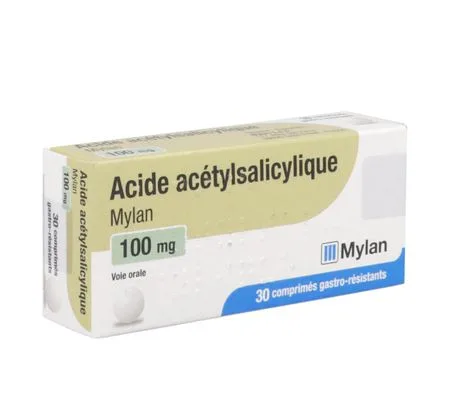
ASPIRIN VIATRIS 100 mg, gastro-resistant tablet
Forms and presentations
Gastro-resistant tablet.
Biconvex, white, round, film-coated gastro-resistant tablet, approximately 8,1 mm in diameter and 3,5 mm thick.
Composition
Acetylsalicylic acid................................................................................................................................100 mg
For one tablet.
Excipient(s) with known effect:
Each tablet contains 60 mg of lactose monohydrate.
Uncoated tablet
Lactose monohydrate
Microcrystalline cellulose
Anhydrous colloidal silica
Potato starch
Film coating
Talc
Triacetin
Methacrylic acid and ethyl acrylate copolymer (1 :1).
Indications
• Secondary prevention of myocardial infarction.
• Prevention of cardiovascular morbidity in patients with stable angina.
• History of unstable angina, outside the acute phase.
• Prevention of graft occlusion after coronary artery bypass grafting (CABG).
• Coronary angioplasty, outside the acute phase.
• Secondary prevention of transient ischaemic attacks (TIA) and strokes, provided intracerebral haemorrhage has been excluded.
ASPIRIN VIATRIS 100 mg, gastro-resistant tablet is not recommended in emergency situations. It is reserved for secondary prevention in the context of chronic treatment.
Dosage and administration
Dosage
Adult
• Secondary prevention of myocardial infarction:
The recommended dose is 100 mg once a day.
• Prevention of cardiovascular morbidity in patients with stable angina:
The recommended dose is 100 mg once a day.
• History of unstable angina, outside the acute phase:
The recommended dose is 100 mg once a day.
• Prevention of graft occlusion after coronary artery bypass grafting (CABG):
The recommended dose is 100 mg once a day.
• Coronary angioplasty, outside the acute phase:
The recommended dose is 100 mg once a day.
• Secondary prevention of transient ischaemic attacks (TIA) and cerebrovascular accidents (stroke), provided intracerebral haemorrhages have been excluded:
• The recommended dose is 100 mg once a day.
ACIDE ACETYLSALICYLIQUE VIATRIS must not be used at higher doses unless indicated by a doctor, and the dose must not exceed 100 mg per day.
For dosage, national and local recommendations should be taken into account.
Elderly patients
In general, acetylsalicylic acid should be used with caution in elderly people, who are more prone to adverse effects. The usual adult dose is recommended in the absence of severe renal or hepatic impairment (see sections Contraindications and Warnings and precautions). Treatment should be reviewed regularly.
Paediatric population
Acetylsalicylic acid must not be administered to children and adolescents under 16 years of age, unless on medical advice and when the benefit outweighs the risk (see section Warnings and precautions).
Method of administration
Oral use.
Tablets must be swallowed whole with sufficient fluid (1/2 glass of water). Because of the enteric coating, tablets must not be crushed, broken or chewed. The coating prevents irritant effects on the intestine.
Duration of administration
Long-term treatment with the lowest possible dose.
Contraindications
• Hypersensitivity to the active substance or to prostaglandin synthetase inhibitors (for example, some asthmatic patients may experience an asthma attack or syncope) or to any of the excipients listed in section Composition.
• Active gastroduodenal ulcer or history of recurrent gastroduodenal ulcer and/or gastric/intestinal bleeding, or other types of bleeding, including cerebral vascular haemorrhage.
• Haemorrhagic diathesis; coagulation disorders, including haemophilia and thrombocytopenia.
• Severe hepatic impairment.
• Severe renal impairment.
• Severe heart failure.
• Doses > 100 mg/day during the third trimester of pregnancy (see section Fertility, pregnancy and breastfeeding).
• Methotrexate used at doses > 15 mg/week.
Warnings and precautions
Caution is advised in cases of:
• Surgical intervention (even minor procedures such as tooth extraction)
• Menorrhagia
• History of gastroduodenal ulcer, or of haemorrhagic episodes.
• Concomitant treatment with anticoagulants.
• Any symptom of unusual bleeding.
• Uncontrolled hypertension.
• Impaired renal and/or hepatic function.
• Bronchial asthma, allergic rhinitis, swelling of the nasal mucosa (nasal polyps), chronic respiratory diseases.
• Allergies to other substances (for example with skin reactions, itching or urticaria)
• Severe skin reactions, including Steven-Johnson syndrome.
• Treatment of elderly patients who are particularly sensitive to the adverse effects of NSAIDs, including acetylsalicylic acid.
• Concomitant treatment with acetylsalicylic acid and other medicines that may alter haemostasis, and medicines that may increase the risk of ulcers, such as oral corticosteroids, serotonin reuptake inhibitors and deferasirox.
• Glucose-6-phosphate dehydrogenase (G6PD) deficiency (genetic disease)
Patients must report any symptoms of unusual bleeding to their doctor. If gastrointestinal bleeding or ulceration occurs, treatment must be discontinued.
Acetylsalicylic acid may promote bronchospasm and asthma attacks or other hypersensitivity reactions. Risk factors are asthma, allergic rhinitis, nasal polyps or chronic respiratory diseases. The same applies to patients who are allergic to other substances (for example with skin reactions, itching or urticaria).
Severe skin reactions, including Steven-Johnson syndrome, have rarely been reported in association with the use of acetylsalicylic acid (see section Adverse effects). Treatment with ACIDE ACETYLSALICYLIQUE VIATRIS must be stopped at the first appearance of a skin rash, mucosal lesions or any other sign of hypersensitivity.
Elderly patients are particularly sensitive to the adverse effects of NSAIDs, including acetylsalicylic acid, in particular gastrointestinal bleeding and perforations, which may be fatal (see section Dosage and administration). If prolonged treatment is necessary, patients must be monitored regularly.
Acetylsalicylic acid may be a contributing factor in causing Reye's syndrome in some children. This medicine is not recommended in adolescents/children under 16 years unless the expected benefits outweigh the risks.
Low-dose acetylsalicylic acid reduces the excretion of uric acid. This may precipitate gout attacks in predisposed patients.
This medicine is not intended for use as an anti-inflammatory, analgesic or antipyretic.
ACIDE ACETYLSALICYLIQUE VIATRIS 100 mg, gastro-resistant tablet contains lactose
Patients with rare hereditary diseases such as galactose intolerance, lactase deficiency or glucose or galactose malabsorption must not take this medicine.
Interactions
Contraindicated combinations
+ Methotrexate (used at doses >15 mg/week)
Concomitant use of methotrexate and acetylsalicylic acid increases the haematological toxicity of methotrexate due to decreased renal clearance of methotrexate by acetylsalicylic acid. Therefore, the combination of methotrexate (at doses > 15 mg/week) with ACIDE ACETYLSALICYLIQUE VIATRIS 100 mg, gastro-resistant tablet is contraindicated (see section Contraindications).
Combinations not recommended
Uricosurics (for example probenecid, sulfinpyrazone)
Salicylates reverse the effect of probenecid and sulfinpyrazone. The combination should be avoided.
Combinations requiring precautions for use or to be taken into account
+ Anticoagulants and thrombolytics (coumarin, heparin, warfarin, alteplase)
Increased risk of bleeding due to inhibition of platelet function, damage to the duodenal mucosa and displacement of oral anticoagulants from their protein binding sites. Bleeding time should be monitored (see section Warnings and precautions). In particular, treatment with acetylsalicylic acid must not be initiated within the first 24 hours following treatment with alteplase in patients who have suffered an acute stroke. Concomitant use is therefore not recommended.
+ Metamizole
Metamizole may reduce the effect of acetylsalicylic acid on platelet aggregation when taken concomitantly. Therefore, this combination should be used with caution in patients taking low-dose aspirin for cardioprotection.
+ Antiplatelet agents (clopidogrel, ticlopidine, cilostazol and dipyridamole) and selective serotonin reuptake inhibitors (SSRIs, such as sertraline or paroxetine)
Increased risk of gastrointestinal bleeding (see section Warnings and precautions).
+ Antidiabetics (such as sulfonylureas or insulin)
Salicylates may increase the hypoglycaemic effect of antidiabetics.
Therefore, a downward dose adjustment of the antidiabetic may be appropriate if high doses of salicylates are used. An increase in blood glucose monitoring is recommended.
+ Digoxin and lithium
Acetylsalicylic acid decreases the renal excretion of digoxin and lithium, resulting in an increase in their plasma concentrations. Monitoring of plasma concentrations of digoxin and lithium is recommended at the start and end of treatment with acetylsalicylic acid. A dose adjustment may be necessary.
+ Diuretics and antihypertensives
NSAIDs may reduce the antihypertensive effects of diuretics and other antihypertensive agents. Blood pressure should be closely monitored. Concomitant administration with angiotensin-converting enzyme inhibitors, angiotensin II receptor antagonists and calcium channel blockers increases the risk of acute renal failure when administered with high doses of acetylsalicylic acid.
Loop diuretics: risk of acute renal failure following a reduction in glomerular filtration rate via inhibition of renal prostaglandin synthesis. Hydration of the patient and monitoring of renal function at the start of treatment are recommended. In case of combination with verapamil, bleeding time should be monitored.
+ Carbonic anhydrase inhibitors (acetazolamide)
May lead to severe acidosis and increased central nervous system toxicity.
+ Systemic corticosteroids
The risk of gastrointestinal ulcer and bleeding may be increased when acetylsalicylic acid and corticosteroids are co-administered (see section Warnings and precautions).
+ Methotrexate (used at doses < 15 mg / week)
The combination of methotrexate and acetylsalicylic acid may increase the haematological toxicity of methotrexate due to decreased renal clearance of methotrexate by acetylsalicylic acid. Weekly complete blood count checks should be performed during the first weeks of treatment with this combination. Enhanced monitoring should be implemented even in the presence of slightly impaired renal function, as well as in elderly patients.
+ Other NSAIDs
Increased risk of gastrointestinal ulcers and bleeding due to synergistic effects.
+ Ibuprofen
Experimental data suggest that ibuprofen may inhibit the effect of low doses of acetylsalicylic acid on platelet aggregation when both drugs are administered simultaneously. However, the limitations of these data and uncertainties regarding the extrapolation of ex vivo data to the clinical context do not allow definitive conclusions to be drawn regarding regular use of ibuprofen, and a clinically significant effect is considered unlikely with occasional use of ibuprofen (see section Pharmacodynamics).
+ Ciclosporin, tacrolimus
Concomitant use of NSAIDs and ciclosporin or tacrolimus may increase the nephrotoxic effect of ciclosporin and tacrolimus. Renal function should be monitored when these medicines are used concomitantly with acetylsalicylic acid.
+ Valproate
Acetylsalicylic acid decreases the binding of valproate to serum albumin, which increases its free plasma concentrations at steady state.
+ Phenytoin
Salicylates decrease the binding of phenytoin to plasma albumin. This may lead to a decrease in total plasma phenytoin concentrations, but to an increase in the free fraction of phenytoin. The unbound concentration and, consequently, the therapeutic effect, does not appear to be significantly altered.
+ Alcohol
Concomitant administration of alcohol and acetylsalicylic acid increases the risk of gastrointestinal bleeding.
Fertility, pregnancy and breastfeeding
Pregnancy
Low doses, less than or equal to 100 mg per day:
Clinical studies show that doses up to 100 mg/day (including 100 mg) appear to be safe in extremely limited obstetric uses requiring specialist monitoring.
Doses above 100 and less than 500 mg per day:
The clinical experience regarding the administration of doses above 100 mg and below 500 mg per day is insufficient. Consequently, the recommendations below for doses above 500 mg per day apply to these doses.
Doses above or equal to 500 mg per day:
Inhibition of prostaglandin synthesis may have negative consequences for pregnancy and/or embryo-fetal development. Data from epidemiological studies suggest an increased risk of spontaneous abortion, cardiac malformations and gastroschisis after use of a prostaglandin synthesis inhibitor during the early stages of pregnancy.
The absolute risk of cardiovascular malformations was increased by less than 1%, up to approximately 1,5%. The risk appears to increase with dose and duration of treatment.
In animals, administration of a prostaglandin synthesis inhibitor has resulted in increased pre- and post-implantation losses, as well as embryo-fetal lethality. In addition, an increased incidence of various types of malformations, particularly cardiovascular, has been observed in animals receiving a prostaglandin synthesis inhibitor during the period of organogenesis.
From the 20th week of pregnancy, taking acetylsalicylic acid may cause oligohydramnios resulting from fetal renal dysfunction. This may occur shortly after the start of treatment and is generally reversible upon discontinuation of treatment. In addition, cases of constriction of the ductus arteriosus have been reported following treatment during the second trimester, most of which resolved after discontinuation of treatment. Therefore, during the first and second trimesters of pregnancy, acetylsalicylic acid should not be administered unless clearly necessary.
If acetylsalicylic acid is used by a woman attempting to conceive, or during the first and second trimesters of pregnancy, the dose should be as low as possible and the duration of treatment as short as possible. Prenatal monitoring for oligohydramnios and constriction of the ductus arteriosus should be considered following exposure to acetylsalicylic acid for several days from the 20th week of gestation. Acetylsalicylic acid treatment must be discontinued if oligohydramnios or constriction of the ductus arteriosus is observed.
During the third trimester of pregnancy, all prostaglandin synthesis inhibitors may expose the fetus to:
• cardiopulmonary toxicity (with premature constriction/closure of the ductus arteriosus and pulmonary arterial hypertension).
• renal dysfunction (see above).
• At the end of pregnancy, the mother and the newborn may present:
- a possible prolongation of bleeding time due to an antiplatelet action that may occur even after very low doses of the medicine.
- inhibition of uterine contractions resulting in delayed labour or prolonged delivery.
Consequently, acetylsalicylic acid at doses above 100 mg/day is contraindicated during the third trimester of pregnancy (see section Contraindications). Doses up to 100 mg/day may only be used under strict obstetric supervision.
Breast-feeding
Salicylates and their metabolites are excreted in small amounts in breast milk. Since, to date, no adverse effect on the newborn has been observed with occasional use, it is not necessary to interrupt breastfeeding after a single administration. With regular use or the intake of high doses, breastfeeding should be interrupted.
Driving and using machines
No studies on the effects on the ability to drive vehicles and use machines have been performed with ACIDE ACETYLSALICYLIQUE VIATRIS 100 mg, gastro-resistant tablet.
Based on the pharmacodynamic properties and side effects of acetylsalicylic acid, no influence on reactivity and the ability to drive or operate machinery is expected.
Adverse effects
Undesirable effects are grouped by system organ class. Within each system organ class, undesirable effects are presented by frequency, using the following convention: very common (>1/10); common (> 1/100, < 1/10); uncommon (> 1/1 000, < 1/100); rare (> 1/10 000, < 1/1 000); very rare (< 1/10 000); not known (cannot be estimated from the available data).
|
Blood and lymphatic system disorders |
Common
Rare
Frequency not known Cases of haemorrhage with prolonged bleeding time such as epistaxis, gingival bleeding. The symptoms may persist for a period of 4 to 8 days after stopping treatment with acetylsalicylic acid. Consequently, there may be an increased risk of bleeding during surgical procedures. Overt (haematemesis, melaena) or occult gastrointestinal haemorrhage causing iron-deficiency anaemia (more frequent at high doses). |
|
Immune system disorders |
Rare
|
|
Metabolism and nutrition disorders |
Frequency not known
|
|
Nervous system disorders |
Rare
|
|
ENT disorders |
Frequency not known
|
|
Vascular disorders |
Rare
|
|
Respiratory, thoracic and mediastinal disorders |
Uncommon
|
|
Gastrointestinal disorders |
Common
Rare
Frequency not known Gastric or duodenal ulcers and perforations. |
|
Hepatobiliary disorders |
Rare Reye's syndrome Frequency not known Hepatic failure, elevated hepatic enzyme levels. |
|
Skin and subcutaneous tissue disorders |
Uncommon Urticaria.
|
|
Renal and urinary disorders |
Frequency not known Impaired renal function, acute renal failure. |
|
Disorders of the reproductive organs and breast |
Rare
|
Reporting of suspected adverse reactions
Reporting suspected adverse reactions after authorisation of the medicinal product is important. It allows continued monitoring of the benefit/risk balance of the medicinal product. Healthcare professionals are asked to report any suspected adverse reaction via the national reporting system: National Agency for the Safety of Medicines and Health Products (ANSM) and the network of Regional Centres of Pharmacovigilance - Website: www.signalement-sante.gouv.fr.
Overdose
Although considerable inter-individual variations may occur, the toxic dose may be considered close to 200 mg/kg in adults and 100 mg/kg in children. The lethal dose of acetylsalicylic acid is 25 to 30 grams. Plasma salicylate concentrations above 300 mg/L indicate intoxication. Plasma salicylate concentrations above 500 mg/L in adults and 300 mg/L in children generally cause severe toxicity. An overdose may be harmful for elderly patients and in particular for young children (frequent overdoses or accidental intoxications may be fatal).
Symptoms of moderate intoxication
Tinnitus, hearing disorders, headache, dizziness, confusion and gastrointestinal symptoms (nausea, vomiting and abdominal pain).
Symptoms of severe intoxication
The symptoms are linked to serious disturbances of the acid-base balance. Hyperventilation appears first, followed by respiratory alkalosis. This is followed by respiratory acidosis caused by suppression of the respiratory centre. In addition, metabolic acidosis occurs due to the presence of salicylates.
As young children are most often not brought to a doctor until an advanced stage of intoxication has been reached, they are generally seen at the acidosis stage.
In addition, the following symptoms may also be observed: hyperthermia and sweating, leading to dehydration; feeling of agitation, convulsions, hallucinations and hypoglycaemia. Depression of the central nervous system may lead to coma, cardiovascular collapse or respiratory arrest.
Treatment of overdose
If a toxic dose has been ingested, hospitalisation is necessary. In the event of moderate intoxication, the first measure will be to induce vomiting.
If this fails, gastric lavage will be performed during the first hour following ingestion of a large quantity of the medicinal product. Subsequently, treatment will include administration of activated charcoal (adsorbent) and sodium sulfate (laxative).
Activated charcoal may be administered as a single dose (50 g for an adult, 1 g/kg body weight for a child up to 12 years).
Alkalinisation of the urine (250 mmol of NaHCO3, for 3 hours) will be carried out while monitoring urinary pH. In case of severe intoxication, haemodialysis will be preferred. Other therapeutic measures will be symptomatic.
Pharmacodynamics
Pharmacotherapeutic group: ANTITHROMBOTIC AGENTS/PLATELET AGGREGATION INHIBITORS, EXCLUDING HEPARIN, ATC code: B01AC06.
Mechanism of action
Acetylsalicylic acid inhibits platelet activation: by blocking platelet cyclo-oxygenase through acetylation, it inhibits the synthesis of thromboxane A2, a physiological activating substance released by platelets which would play a role in the complications of atheromatous lesions.
The inhibition of thromboxane A2 synthesis is irreversible given that thrombocytes, which have no nucleus, are not able to synthesise cyclo-oxygenase to replace that acetylated by acetylsalicylic acid.
Pharmacodynamic effects
Repeated doses of 20 to 325 mg result in inhibition of enzymatic activity of 30 to 95 %.
Given the irreversible nature of the binding, the effect persists for the entire lifespan of blood platelets (7 to 10 days). The inhibitory effect does not wane during prolonged treatment and enzymatic activity gradually recovers as platelets are renewed 24 to 48 hours after cessation of treatment.
Acetylsalicylic acid prolongs bleeding time by approximately 50 to 100 % on average, but individual variations may be observed.
Experimental data suggest that ibuprofen may inhibit the effect of low doses of acetylsalicylic acid on platelet aggregation when both medicines are administered simultaneously. In one study, administration of a single dose of 400 mg of ibuprofen within 8 hours before or 30 minutes after administration of immediate-release acetylsalicylic acid (81 mg) resulted in a decrease in the effect of acetylsalicylic acid on thromboxane formation or on platelet aggregation. However, the limitations of these data and uncertainties regarding the extrapolation of the data ex vivo to the clinical context do not allow definitive conclusions to be drawn concerning regular use of ibuprofen, and no clinically significant effect is considered likely in case of occasional use of ibuprofen.
Pharmacokinetics
Absorption
After oral administration, acetylsalicylic acid is rapidly and completely absorbed from the gastrointestinal tract. The main site of absorption is the proximal segment of the small intestine. However, a significant part of the dose is already hydrolysed to salicylic acid in the intestinal wall during the absorption process. The degree of hydrolysis depends on the rate of absorption.
After taking ACIDE ACETYLSALICYLIQUE VIATRIS 100 mg, gastro-resistant tablet, maximum plasma concentrations of acetylsalicylic acid and salicylic acid are reached after approximately 3,5 hours and 4,5 hours respectively following administration on an empty stomach. If the tablets are taken with food, maximum plasma concentrations are reached approximately 3 hours later compared with administration on an empty stomach.
Distribution
Acetylsalicylic acid and its main metabolite, salicylic acid, are highly bound to plasma proteins, mainly albumin, and rapidly distributed to all organs. The degree of plasma protein binding is strongly dependent on the concentration of salicylic acid and albumin.
The volume of distribution of acetylsalicylic acid is between 9,6 and 12 L. Salicylic acid diffuses slowly into synovial fluid, crosses the placental barrier and passes into maternal milk.
Biotransformation
Acetylsalicylic acid is rapidly metabolised to salicylic acid, with a half-life of 15 to 30 minutes. Salicylic acid is then converted into glycine and glucuronic acid conjugates, and into traces of gentisic acid.
Elimination
Salicylic acid and its metabolites are mainly excreted by the kidneys.
The elimination kinetics of salicylic acid are dose-dependent, because metabolism is limited by the capacity of hepatic enzymes. Thus the elimination half-life varies: it is 2 to 3 hours after administration of low doses, 12 hours after administration of usual analgesic doses, and 15 to 30 hours after administration of high therapeutic doses or in cases of intoxication.
Preclinical safety
The preclinical tolerance profile of acetylsalicylic acid is well documented.
In experimental animal studies, salicylates caused no organ lesions apart from renal lesions.
In studies in rats, foetotoxicity and teratogenic effects were observed with acetylsalicylic acid administered at doses toxic to the mother. The clinical relevance of these observations is unknown, insofar as the doses used in the non-clinical studies are much higher (by at least a factor of 7) than the maximum recommended doses for the cardiovascular indications concerned.
The mutagenic and carcinogenic effects of acetylsalicylic acid have been studied extensively. The overall results show no relevant signs of any mutagenic or carcinogenic effect in studies conducted in mice and rats.
SPECIAL PRECAUTIONS FOR DISPOSAL AND OTHER HANDLING
Any unused medicinal product or waste material should be disposed of in accordance with local requirements.
Prescription, supply and reimbursement
| Marketing authorisation (AMM) |
|
| Price: |
|
- Indication(s) appearing in the marketing authorisation at the date of publication of this decree
Collection.
1 RUE DE TURIN
69007 LYON
Tel: 04 37 25 75 00 https://www.viatris.fr/
Source: VIDAL · Updated on 10/11/2026. This information does not replace advice from a healthcare professional.