
Medicines
SmPC of 23/07/2026
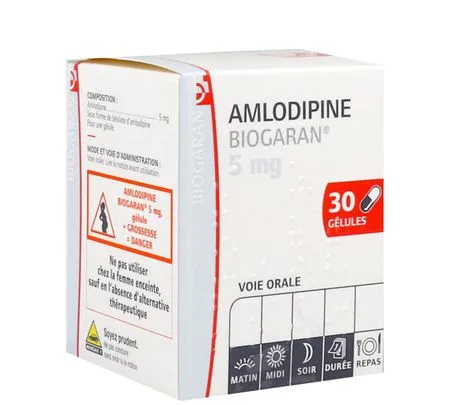
AMLODIPINE BIOGARAN 5 mg, capsule
Composition
Amlodipine........................................................................................................................................................5 mg
As amlodipine besilate.
For one capsule.
For the full list of excipients, see section Composition.
Microcrystalline cellulose, maize starch, magnesium stearate.
Capsule shell : gelatin, titanium dioxide (E171), yellow iron oxide (E172).
Dosage and administration
Dosage
Adults
For hypertension and angina, the usual initial dose is 5 mg of AMLODIPINE BIOGARAN once daily, which may be increased up to a maximum dose of 10 mg depending on the individual patient's response.
In hypertensive patients, AMLODIPINE BIOGARAN has been used in combination with a thiazide diuretic, an alpha-blocker, a beta-blocker or an angiotensin-converting enzyme inhibitor. In angina, AMLODIPINE BIOGARAN may be used as monotherapy or in combination with other anti-anginal agents in patients with angina refractory to nitrates and/or adequate doses of beta-blockers.
No dose adjustment of AMLODIPINE BIOGARAN is necessary when co-administered with thiazide diuretics, beta-blockers and angiotensin-converting enzyme inhibitors.
Special populations
Elderly patients
AMLODIPINE BIOGARAN used at similar doses shows equally good tolerability in elderly and younger patients. Normal dosage regimens are recommended in elderly subjects, but dose increases should be made with caution (see sections Warnings and precautions and Pharmacokinetics).
Patients with hepatic impairment
Dosage recommendations have not been established in patients with mild to moderate hepatic impairment, so the dose should be chosen with caution and should start at the lowest effective dose (see sections Warnings and precautions and Pharmacokinetics). The pharmacokinetic properties of amlodipine have not been studied in severe hepatic impairment. Amlodipine should be started at the lowest dose and increased slowly in patients with severe hepatic impairment.
Patients with renal impairment
Changes in plasma amlodipine concentrations do not correlate with the degree of renal impairment, so a usual dosage is recommended. Amlodipine is not dialysable.
Paediatric population
• Hypertensive children and adolescents aged 6 years to 17 years
The recommended oral antihypertensive dosage in children aged 6 to 17 years is 2,5 mg once daily as an initial dose, which may be increased up to 5 mg once daily if the desired blood pressure is not achieved after four weeks. Doses higher than 5 mg once daily have not been studied in paediatric patients (see sections Pharmacodynamics and Pharmacokinetics).
An amlodipine dose of 2,5 mg is not possible with this medicinal product.
• Children under 6 years
No data are available.
Method of administration
Capsule for oral administration.
Contraindications
Amlodipine is contraindicated in patients with:
• hypersensitivity to amlodipine, to dihydropyridine derivatives or to any of the excipients listed in section Composition ;
• severe hypotension;
• shock (including cardiogenic shock);
• obstruction of the left ventricular outflow tract (for example, high-grade aortic stenosis);
• haemodynamically unstable heart failure following acute myocardial infarction.
Warnings and precautions
The safety and efficacy of amlodipine in hypertensive crisis have not been established.
Patients with heart failure
Patients with heart failure should be treated with caution. In a long-term controlled versus placebo study conducted in patients with severe heart failure (NYHA classes III and IV), the reported incidence of pulmonary oedema was higher in the amlodipine-treated group compared with the placebo group (see section Pharmacodynamics). Calcium channel blockers including amlodipine should be used with caution in patients with congestive heart failure because they may increase the risk of cardiovascular events and mortality.
Patients with hepatic impairment
The half-life of amlodipine is prolonged and its AUC (Area Under the Curve) is greater in patients with hepatic impairment; dosage recommendations have not been established. Therefore amlodipine should be initiated at the lowest effective dose and with caution, both during treatment initiation and when increasing the dose. A slow dose increase and careful monitoring may be necessary in patients with severe hepatic impairment.
Elderly patients
In elderly subjects, dose increases should be made with caution (see sections Dosage and administration and Pharmacokinetics).
Patients with renal impairment
Amlodipine may be used in these patients at normal doses. Changes in plasma concentrations of amlodipine do not correlate with the degree of renal impairment. Amlodipine is not dialysable.
Interactions
Effects of other medicines on amlodipine
+ CYP3A4 inhibitors
Concomitant use of amlodipine with strong or moderate CYP3A4 inhibitors (protease inhibitors, azole antifungals, macrolides such as erythromycin or clarithromycin, verapamil or diltiazem) may result in a significant increase in plasma concentration of amlodipine, leading to an increased risk of hypotension.
The clinical translation of these pharmacokinetic variations may be more pronounced in elderly subjects. Therefore, clinical monitoring and dose adjustment may be necessary.
+ CYP3A4 inducers
When co-administered with known CYP3A4 inducers, the plasma concentration of amlodipine may vary. Therefore, blood pressure should be monitored and dose adjustment should be considered during and after concomitant administration of the medicinal product, particularly with potent CYP3A4 inducers (for example, rifampicin, St John's wort [Hypericum perforatumHypericum perforatum]).
Administration of amlodipine with grapefruit or grapefruit juice is not recommended, as bioavailability may be increased in some patients, which may lead to an increase in blood-pressure-lowering effects.
+ Dantrolene (infusion)
In animals, lethal ventricular fibrillation and cardiovascular collapse have been observed in association with hyperkalaemia following administration of verapamil and intravenous dantrolene. Given the risk of hyperkalaemia, concomitant administration of calcium channel blockers such as amlodipine is recommended to be avoided in patients susceptible to malignant hyperthermia and in the management of malignant hyperthermia.
Effects of amlodipine on other medicines
The blood-pressure-lowering effects of amlodipine are additive to those of other medicines with antihypertensive properties.
+ Tacrolimus
There is a risk of increased plasma concentrations of tacrolimus when co-administered with amlodipine, but the pharmacokinetic mechanism of this interaction is not fully understood. In order to avoid tacrolimus toxicity, administration of amlodipine to a patient treated with tacrolimus requires monitoring of plasma tacrolimus concentrations and dose adjustment of tacrolimus where appropriate.
+ Mechanistic target of rapamycin (mTOR) inhibitors
mTOR inhibitors such as sirolimus, temsirolimus and everolimus are substrates of CYP3A. Amlodipine is a weak inhibitor of CYP3A. When used concomitantly with amlodipine, mTOR inhibitors may have increased activity.
+ Ciclosporin
No interaction studies have been conducted with ciclosporin and amlodipine in healthy volunteers or other populations, except in patients who have undergone renal transplantation: a variable increase in the trough concentration of ciclosporin (from 0% to 40% on average) was then observed. Ciclosporin levels should be monitored in subjects who have undergone renal transplantation and are treated with amlodipine, and a reduction in the ciclosporin dose should be considered if necessary.
+ Simvastatin
Concomitant administration of repeated doses of 10 mg amlodipine with 80 mg simvastatin results in a 77 % increase in simvastatin exposure compared with simvastatin alone. The daily dose of simvastatin should be limited to 20 mg in patients treated with amlodipine.
In clinical interaction studies, amlodipine did not affect the pharmacokinetic properties of atorvastatin, digoxin or warfarin.
Fertility, pregnancy and breastfeeding
Pregnancy
In women, the safety of use of amlodipine during pregnancy has not been established.
In animal studies, reproductive toxicity was observed at high doses (see section Preclinical safety).
Use during pregnancy is recommended only if no safer alternative is available and when the disease itself presents greater risks to the mother and foetus.
Breast-feeding
Amlodipine is excreted in human milk. The proportion of the maternal dose received by the infant was estimated at an interquartile range of 3 to 7 %, with a maximum of 15 %. The effect of amlodipine on infants is unknown. The decision to continue or discontinue breastfeeding, or to continue or discontinue amlodipine therapy, should be made taking into account the benefit of breastfeeding for the child and the benefit of amlodipine therapy for the mother.
Fertility
Reversible biochemical changes in the head of spermatozoa have been reported in some patients treated with calcium channel blockers. Clinical data are insufficient regarding the potential effect of amlodipine on fertility. In a study in rats, adverse effects were detected on male fertility (see section Preclinical safety).
Driving and using machines
AMLODIPINE BIOGARAN may have a minor or moderate influence on the ability to drive vehicles and use machines. If patients treated with amlodipine experience dizziness, headache, fatigue or nausea, their ability to react may be impaired. Caution is recommended, particularly at the start of treatment.
Adverse effects
Summary of the safety profile
The most frequently reported adverse reactions during treatment are somnolence, dizziness, headache, palpitations, flushing, abdominal pain, nausea, ankle oedema, oedema and fatigue.
List of adverse effects
The following adverse effects have been observed and reported during treatment with amlodipine, according to the following frequencies: very common (≥ 1/10); common (≥ 1/100 to < 1/10); uncommon (≥ 1/1000 to < 1/100); rare (≥ 1/10 000 to < 1/1000); very rare (< 1/10 000); frequency not known (cannot be estimated from the available data).
Within each frequency grouping, adverse effects are presented in order of decreasing seriousness.
|
System organ class |
Frequency |
Adverse effects |
|
Blood and lymphatic system disorders |
Very rare |
Leukopenia, thrombocytopenia |
|
Immune system disorders |
Very rare |
Allergic reaction |
|
Metabolism and nutrition disorders |
Very rare |
Hyperglycaemia |
|
Psychiatric disorders |
Uncommon |
Depression, mood changes (including anxiety), insomnia |
|
Rare |
Confusion |
|
|
Nervous system disorders |
Common |
Somnolence, dizziness, headache (particularly at the start of treatment) |
|
Uncommon |
Tremor, dysgeusia, syncope, hypoesthesia, paresthesia |
|
|
Very rare |
Hypertonia, peripheral neuropathy |
|
|
Frequency not known |
Extrapyramidal disorder |
|
|
Eye disorders |
Common |
Visual disturbance (including diplopia) |
|
Ear and labyrinth disorders |
Uncommon |
Tinnitus |
|
Cardiac disorders |
Common |
Palpitations |
|
Uncommon |
Arrhythmia (including bradycardia, ventricular tachycardia and atrial fibrillation) |
|
|
Very rare |
Myocardial infarction |
|
|
Vascular disorders |
Common |
Hot flush |
|
Uncommon |
Hypotension |
|
|
Very rare |
Vasculitis |
|
|
Respiratory, thoracic and mediastinal disorders |
Common |
Dyspnoea |
|
Uncommon |
Cough, rhinitis |
|
|
Gastrointestinal disorders |
Common |
Abdominal pain, nausea, dyspepsia, bowel disorders (including diarrhoea and constipation) |
|
Uncommon |
Vomiting, dry mouth |
|
|
Very rare |
Pancreatitis, gastritis, gingival hyperplasia |
|
|
Hepatobiliary disorders |
Very rare |
Hepatitis, jaundice, elevated liver enzyme* |
|
Skin and subcutaneous tissue disorders |
Uncommon |
Alopecia, purpura, change in skin colour, hyperhidrosis, pruritus, skin rash, exanthema, urticaria |
|
Very rare |
Angioedema, erythema multiforme, exfoliative dermatitis, Stevens-Johnson syndrome, Quincke's oedema, photosensitivity |
|
|
Frequency not known |
Toxic epidermal necrolysis |
|
|
Musculoskeletal and systemic disorders |
Common |
Ankle oedema, muscle cramps |
|
Uncommon |
Arthralgia, myalgia, back pain |
|
|
Renal and urinary disorders |
Uncommon |
Micturition disorder, nocturia, increased urinary frequency |
|
Disorders of the reproductive system and breast |
Uncommon |
Impotence, gynaecomastia |
|
General disorders and administration site conditions |
Very common |
Oedema |
|
Common |
Fatigue, asthenia |
|
|
Uncommon |
Chest pain, pain, malaise |
|
|
Investigations |
Uncommon |
Weight increase, weight decrease |
Generally suggestive of cholestasis.
Reporting of suspected adverse reactions
Reporting suspected adverse reactions after authorisation of the medicinal product is important. It allows continued monitoring of the benefit/risk balance of the medicinal product. Healthcare professionals are asked to report any suspected adverse reactions via the national reporting system: National Agency for the Safety of Medicines and Health Products (ANSM) and the network of Regional Pharmacovigilance Centres - Website: https://signalement.social-sante.gouv.fr/.
Overdose
In humans, experience of intentional overdose is limited.
Symptoms
Available data suggest that a significant overdose may result in excessive peripheral vasodilation and possibly reflex tachycardia. Marked and probably prolonged systemic hypotension, potentially progressing to shock with fatal outcome, has been reported.
Cases of non-cardiogenic pulmonary edema have rarely been reported following an overdose of amlodipine, which may appear in a delayed manner (24 – 48 hours after ingestion) and require ventilatory assistance. Early resuscitation measures (including fluid overload) to maintain perfusion and cardiac output may be contributing factors.
Treatment
Clinically significant hypotension due to amlodipine overdose requires active cardiovascular support including frequent monitoring of respiratory and cardiac function, elevation of the limbs, and management of blood volume and urine output.
A vasoconstrictor may be useful to restore vascular tone and blood pressure, provided there is no contraindication to its use. Intravenous administration of calcium gluconate may be beneficial in reversing the effects of calcium channel blockade.
Gastric lavage may be justified in certain cases. In healthy volunteers, the use of charcoal up to two hours after administration of amlodipine 10 mg has been shown to reduce the rates of amlodipine absorption.
Since amlodipine is highly protein-bound, dialysis will probably provide no benefit.
Pharmacodynamics
Pharmacotherapeutic class: selective calcium inhibitors with mainly vascular effect, ATC code: C08CA01.
Amlodipine is a calcium ion influx inhibitor of the dihydropyridine group (slow channel inhibitor or calcium ion antagonist) and inhibits transmembrane influx of calcium ions into cardiac muscle and vascular smooth muscle.
The mechanism of the antihypertensive effect of amlodipine is related to a direct relaxant effect on vascular smooth muscle. The precise mechanism by which amlodipine relieves angina has not been fully determined, but amlodipine reduces total ischaemic burden through the following two actions:
1) Amlodipine dilates peripheral arterioles and, consequently, reduces total peripheral resistance (afterload) against which the heart works. As heart rate remains stable, this reduction in cardiac workload decreases myocardial energy consumption and oxygen requirements.
2) The mechanism of action of amlodipine also probably involves dilation of the main coronary arteries and coronary arterioles, in both normal and ischaemic regions. This dilation increases oxygen delivery to the myocardium in patients with coronary artery spasm (Prinzmetal's angina).
In hypertensive patients, once-daily administration produces clinically significant reductions in blood pressure both supine and standing over a 24 hour interval. Owing to the slow onset of action, acute hypotension is not associated with the administration of amlodipine.
In patients with angina, once-daily administration of amlodipine increases total exercise duration, time to onset of angina and to ST segment depression of 1 mm, and decreases both the frequency of angina attacks and consumption of glyceryl trinitrate tablets.
Amlodipine has not been associated with adverse metabolic effects or changes in plasma lipids, and is suitable for patients with asthma, diabetes and gout.
Use in patients with coronary artery disease
The efficacy of amlodipine for preventing clinical events in patients with coronary artery disease was evaluated in an independent, multicentre, randomised, double-blind, placebo-controlled study versus placebo-controlled study in 1997 patients: the CAMELOT study (Comparison of Amlodipine vs Enalapril to Limit Occurrences of Thrombosis, comparison of amlodipine and enalapril in limiting episodes of thrombosis). Among these patients, 663 were treated with amlodipine 5 - 10 mg, 673 were treated with enalapril 10 ‑ 20 mg, and 655 with placebo, in addition to standard treatment with statins, beta-blockers, diuretics and aspirin for two years. The main efficacy results are presented in Table 1. The results indicate that treatment with amlodipine was associated with a lower number of hospitalizations for angina and revascularization procedures in patients with coronary artery disease.
|
Table 1. Incidence of significant clinical endpoints in the CAMELOT study |
|||||
|
|
Rate of cardiovascular events, number (%) |
Amlodipine versus Placebo |
|||
|
Endpoints |
Amlodipine |
Placebo |
Enalapril |
Relative risk (CI at 95 %) |
p-value |
|
Primary endpoint |
|
|
|
|
|
|
Cardiovascular adverse events |
110 (16,6) |
151 (23,1) |
136 (20,2) |
0,69 (0,54 - 0,88) |
0,003 |
|
Individual components |
|
|
|
|
|
|
Coronary revascularisation |
78 (11,8) |
103 (15,7) |
95 (14,1) |
0,73 (0,54 - 0,98) |
0,03 |
|
Hospitalisation for angina |
51 (7,7) |
84 (12,8) |
86 (12,8) |
0,58 (0,41 - 0,82) |
0,002 |
|
Non-fatal MI |
14 (2,1) |
19 (2,9) |
11 (1,6) |
0,73 (0,37 - 1,46) |
0,37 |
|
Stroke or TIA |
6 (0,9) |
12 (1,8) |
8 (1,2) |
0,50 (0,19 - 1,32) |
0,15 |
|
Cardiovascular mortality |
5 (0,8) |
2 (0,3) |
5 (0,7) |
2,46 (0,48 - 12,7) |
0,27 |
|
Hospitalisation for CHF |
3 (0,5) |
5 (0,8) |
4 (0,6) |
0,59 (0,14 - 2,47) |
0,46 |
|
Resuscitation after cardiac arrest |
0 |
4 (0,6) |
1 (0,1) |
NA |
0,04 |
|
Occurrence of peripheral vascular disease |
5 (0,8) |
2 (0,3) |
8 (1,2) |
2,6 (0,50 - 13,4) |
0,24 |
|
Abbreviations: CHF, congestive heart failure; CI, confidence interval; MI, myocardial infarction; TIA, transient ischaemic attacks; CVA, cerebrovascular accident. |
|||||
Use in patients with heart failure
Haemodynamic studies and controlled exercise-based studies conducted in patients with NYHA class II-IV heart failure have shown that amlodipine did not cause any clinical deterioration in exercise tolerance, left ventricular ejection fraction and clinical symptomatology.
A controlled study versus placebo (PRAISE) designed to evaluate patients with NYHA class III-IV heart failure receiving digoxin, diuretics and ACE inhibitors showed that amlodipine did not increase the risk of mortality or combined mortality and morbidity associated with heart failure.
In a controlled long-term follow-up study versus placebo (PRAISE-2) on amlodipine in patients with NYHA class III and IV heart failure without clinical symptoms or objective findings suggesting or underlying ischaemic disease, treated with stable doses of ACE inhibitors, digitalis and diuretics, amlodipine had no effect on total cardiovascular mortality. In this same population, amlodipine was associated with an increase in reports of pulmonary oedema.
Treatment to Prevent Heart Attack Trial (ALLHAT) study of heart failure prevention
The ALLHAT study (Antihypertensive and Lipid-Lowering Treatment to Prevent Heart Attack Trial), a randomised, double-blind study on morbidity and mortality, was conducted to compare recent treatments: amlodipine 2,5 to 10 mg/day (calcium inhibitor) or lisinopril 10 to 40 mg/day (ACE inhibitor) as first-line treatment compared with a thiazide diuretic, chlorthalidone at a dose of 12,5 to 25 mg/day in mild to moderate hypertension.
In total, 33 357 hypertensive patients aged 55 years or older were randomised and followed for an average of 4,9 years. Patients had at least one additional coronary heart disease risk factor, including: history of myocardial infarction or cerebrovascular accident (more than six months before inclusion) or documentation of other atherosclerotic cardiovascular diseases (51,5% in total), type 2 diabetes (36,1%), HDL cholesterol < 35 mg/dL (11,6%), left ventricular hypertrophy diagnosed by electrocardiography or echocardiography (20,9%), current smoking (21,9%).
The primary composite endpoint grouped fatal coronary heart disease or non-fatal myocardial infarction. No significant difference in the primary endpoint was observed between the amlodipine-based treatment and the chlortalidone-based treatment: RR: 0,98; 95% CI (0,90 to 1,07); p = 0,65. Among the secondary endpoints, the incidence of heart failure (a component of a composite cardiovascular endpoint) was significantly higher in the amlodipine group compared with the chlortalidone group (10,2% versus 7,7%; RR: 1,38; 95% CI [1,25 to 1,52]; p < 0,001). However, no significant difference in all-cause mortality was observed between the amlodipine-based treatment and the chlortalidone-based treatment: RR: 0,96; 95% CI [0,89 to 1,02]; p = 0,20.
Paediatric population (aged at least six years)
In a study involving 268 children aged 6 to 17 years with predominantly secondary hypertension, a dose of 2,5 mg and a dose of 5 mg of amlodipine were compared with placebo. Both doses were found to reduce systolic blood pressure significantly more than placebo. The difference between the two doses was not statistically significant.
The long-term effects of amlodipine on growth, puberty and general development have not been studied. The long-term efficacy of amlodipine treatment in children to reduce cardiovascular morbidity and mortality in adulthood has not been established.
Pharmacokinetics
Absorption, distribution, plasma protein binding
After oral administration of therapeutic doses, amlodipine was well absorbed with peak plasma concentrations occurring 6 to 12 hours after dosing. Absolute bioavailability was estimated to be between 64 and 80%. The volume of distribution is approximately 21 L/kg. Studies in vitro have shown that approximately 97,5% of circulating amlodipine is bound to plasma proteins.
The bioavailability of amlodipine is not affected by food intake.
Biotransformation, elimination
The terminal plasma elimination half-life is approximately 35 to 50 hours, compatible with once-daily administration. Amlodipine is extensively metabolised by the liver into inactive metabolites, 10% of the parent compound and 60% of metabolites being excreted in the urine.
Hepatic impairment
Very limited clinical data are available regarding the administration of amlodipine in patients with hepatic impairment. Patients with hepatic impairment have decreased amlodipine clearance resulting in a longer half-life and an increase in AUC of approximately 40 - 60%.
Elderly patients
The time to reach peak plasma concentrations of amlodipine is similar in elderly and younger subjects. Amlodipine clearance tends to decrease, resulting in an increase in AUC and elimination half-life in elderly patients. The increase in AUC and elimination half-life in patients with congestive heart failure was consistent with expectations for the age group of patients studied.
Paediatric population
A population pharmacokinetic study was conducted in 74 hypertensive children aged 1 to 17 years (34 patients being aged 6 to 12 years and 28 patients aged 13 to 17 years), treated with an amlodipine dose ranging between 1,25 and 20 mg administered once or twice daily. In children aged 6 to 12 years and in adolescents aged 13 to 17 years, the typical oral clearance (CL/F) was 22,5 and 27,4 L/h in boys, respectively, and 16,4 and 21,3 L/h in girls. Wide inter-individual variability in exposure was observed. Available data in children aged less than 6 years are limited.
Preclinical safety
Reprotoxicity
Reproductive toxicity studies in rats and mice showed delayed parturition, prolonged labour and decreased offspring survival at doses approximately 50 times higher than the maximum recommended human dose on a mg/kg basis.
Impairment of fertility
No effect on fertility was observed in rats treated with amlodipine (males for 64 days and females for 14 days before mating) at doses reaching 10 mg/kg/day (eight times* the maximum recommended human dose of 10 mg on a mg/m basis2). In another study conducted in rats in which male rats were treated with amlodipine besylate for 30 days at a dose comparable to the dose administered to humans on a mg/kg basis, a decrease in plasma levels of follicle-stimulating hormone and testosterone was found, as well as a decrease in sperm density and in the number of mature spermatids and Sertoli cells.
Carcinogenic and mutagenic potential
Rats and mice treated with amlodipine in the diet for two years, at concentrations calculated to deliver daily doses of 0,5; 1,25 and 2,5 mg/kg/day, showed no signs of carcinogenicity. The maximum dose (for the similar mouse and for rats twice* the maximum recommended clinical dose of 10 mg on a mg/m basis2) was close to the maximum tolerated dose for the mouse but not for the rat.
Mutagenicity studies revealed no drug-related effect at either the gene or chromosome level.
* Based on a patient weighing 50 kg.
Prescription, supply and reimbursement
| Marketing authorisation (AMM) |
|
| Price: |
|
Collection.
15 BOULEVARD CHARLES DE GAULLE
92707 COLOMBES CEDEX
Tel: 01 55 72 41 00 contact@biogaran.fr
https://www.biogaran.fr
Source: VIDAL · Updated on 10/11/2026. This information does not replace advice from a healthcare professional.