
Medicines
SmPC of 05/03/2026
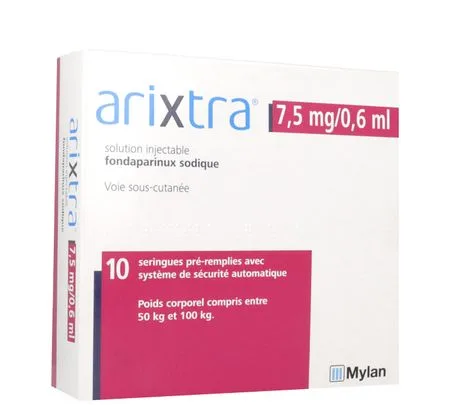
ARIXTRA 7,5 mg/0,6 mL, injectable solution, in prefilled syringe
Forms and presentations
Solution for injection.
The solution is clear and colourless to slightly yellow.
Composition
Each prefilled syringe contains 7,5 mg of fondaparinux sodium in 0,6 mL of solution for injection.
Excipient(s) with known effect: Contains less than 1 mmol of sodium (23 mg) per dose, and therefore is considered essentially sodium-free.
Sodium chloride
Water for injections
Hydrochloric acid
Sodium hydroxide
Indications
Treatment of acute deep vein thrombosis (DVT) and acute pulmonary embolism (PE) in adults, excluding patients who are haemodynamically unstable or who require thrombolysis or pulmonary embolectomy.
Dosage and administration
Dosage
The recommended dose of fondaparinux is 7,5 mg (for patients weighing between 50 and 100 kg) once daily, administered by subcutaneous injection. For patients weighing less than 50 kg, the recommended dose is 5 mg. For patients weighing more than 100 kg, the recommended dose is 10 mg.
Treatment will be continued for at least 5 days and until the adequate dose of oral anticoagulant treatment initiated as a bridge has been reached (International Normalized Ratio between 2 and 3). Concomitant oral anticoagulant treatment should be initiated as soon as possible and generally within 72 hours. The mean duration of administration in clinical studies was 7 days and clinical experience beyond 10 days is limited.
Special populations
Elderly patients - No dose adjustment is necessary. In patients aged 75 years and older, fondaparinux should be used with caution, due to the age-related decline in renal function (see section Warnings and precautions).
Renal impairment - Fondaparinux should be used with caution in patients with moderate renal impairment (see section Warnings and precautions).
There is no experience in the subgroup of patients of high body weight (> 100 kg) with moderate renal impairment (creatinine clearance between 30 and 50 ml/min). In this subgroup, after an initial dose of 10 mg once daily, a reduction of the daily dose to 7,5 mg may be considered based on pharmacokinetic modelling data (see section Warnings and precautions).
Fondaparinux must not be used in patients with severe renal impairment (creatinine clearance < 30 ml/min) (see section Contraindications).
Hepatic impairment - No dose adjustment is necessary in patients with mild or moderate hepatic impairment. In patients with severe hepatic impairment, fondaparinux should be used with caution: this patient group has not been studied (see sections Warnings and precautions and Pharmacokinetics).
Paediatric population - The use of fondaparinux is not recommended in children under 17 years of age, given the limited tolerability and efficacy data available (see sections Pharmacodynamics and Pharmacokinetics).
Method of administration
Fondaparinux must be injected by deep subcutaneous route, with the patient lying down. Injection sites should be alternated between the antero-lateral and postero-lateral abdominal wall, alternating between the right and left sides. To avoid loss of medicinal product when using the pre-filled syringe, do not expel the air bubble from the syringe before performing the injection. The needle must be inserted perpendicularly along its entire length into a skin fold formed between the thumb and index finger; this skin fold must be maintained for the entire duration of the injection.
For further instructions on use, handling and disposal, see section Disposal and handling.
Contraindications
- hypersensitivity to the active substance or to any of the excipients mentioned in section Composition
- clinically significant active bleeding
- acute bacterial endocarditis
- severe renal impairment (creatinine clearance < 30 ml/min).
Warnings and precautions
Subcutaneous route only. Fondaparinux must not be injected intramuscularly.
Experience with the treatment of haemodynamically unstable patients with fondaparinux is limited, and there is no experience in patients requiring thrombolysis, embolectomy, or placement of a vena cava filter.
Haemorrhage
Fondaparinux should be used with caution in conditions associated with an increased bleeding risk, including acquired or congenital coagulation disorders (for example, platelet count < 50 000/mm3), active gastrointestinal ulcerative disease, recent intracranial haemorrhage or recent cerebral, spinal or ophthalmic surgery, and in the special populations mentioned below.
As with other anticoagulants, fondaparinux should be used with caution in patients who have undergone recent surgery (< 3 days) and only once surgical haemostasis has been established.
Treatments likely to increase the risk of bleeding must not be administered in combination with fondaparinux. These treatments include: desirudin, fibrinolytic agents, GP IIb/IIIa receptor antagonists, heparin, heparinoids or Low Molecular Weight Heparins (LMWHs). When treating venous thromboembolic events, concomitant treatment with a vitamin K antagonist will be administered according to the modalities defined in section Interactions. Other platelet aggregation inhibitors (acetylsalicylic acid, dipyridamole, sulfinpyrazone, ticlopidine or clopidogrel) and NSAIDs should be used with caution. If the combination cannot be avoided, particular monitoring is required.
Spinal/Epidural anaesthesia
In patients receiving fondaparinux as curative treatment for venous thromboembolic events, unlike prophylactic treatment, epidural or spinal anaesthesia must not be used during surgical procedures.
Elderly patients
Elderly subjects have an increased risk of bleeding. Since renal function generally declines with age, elderly patients may show reduced elimination and increased plasma concentrations of fondaparinux (see section Pharmacokinetics). In patients aged under 65 years, between 65 and 75 years and over 75 years, treated at the recommended doses for DVT or PE, the incidence of haemorrhage was 3,0%, 4,5% and 6,5% respectively. The corresponding incidences for patients receiving enoxaparin at the recommended doses for the treatment of DVT were 2,5%, 3,6% and 8,3% respectively, whereas the incidences in patients receiving unfractionated heparin at the recommended doses for the treatment of PE were 5,5%, 6,6% and 7,4% respectively. In elderly patients, fondaparinux should be used with caution (see section Dosage and administration).
Low body weight subjects
Clinical experience is limited in patients weighing less than 50 kg. Fondaparinux should be used with caution and at a daily dose of 5 mg in this population (see sections Dosage and administration and Pharmacokinetics).
Renal impairment
The risk of bleeding increases with deterioration of renal function. Fondaparinux is mainly excreted by the kidney. The incidence of haemorrhages in patients treated at the recommended doses for DVT or PE, and having normal renal function, mild, moderate or severe renal impairment, was 3,0 % (34/1 132), 4,4 % (32/733), 6,6 % (21/318), and 14,5 % (8/55) respectively. The corresponding incidences for patients treated with enoxaparin at the recommended doses for the treatment of DVT were 2,3 % (13/559), 4,6 % (17/368), 9,7 % (14/145) and 11,1 % (2/18), whereas the incidences in patients treated with unfractionated heparin at the recommended doses for the treatment of PE were respectively 6,9 % (36/523), 3,1 % (11/352), 11,1 % (18/162) and 10,7 % (3/28).
Fondaparinux is contraindicated in patients with severe renal impairment (creatinine clearance < 30 ml/min) and should be used with caution in patients with moderate renal impairment (creatinine clearance between 30 and 50 ml/min). The duration of treatment must not exceed that evaluated in clinical studies (on average 7 days) (see sections Dosage and administration, Contraindications and Pharmacokinetics).
There is no experience in the subgroup of patients with both high body weight (> 100 kg) and moderate renal impairment (creatinine clearance between 30 and 50 ml/min). Fondaparinux should be used with caution in these patients. After an initial dose of 10 mg once daily, a reduction of the daily dose to 7,5 mg may be considered on the basis of pharmacokinetic modelling data (see section Dosage and administration).
Severe hepatic impairment
The use of fondaparinux should be considered with caution due to an increased bleeding risk resulting from coagulation factor deficiency in patients with severe hepatic impairment (see section Dosage and administration).
Patients with heparin-induced thrombocytopenia
Fondaparinux should be used with caution in patients with a history of HIT (Heparin-Induced Thrombocytopenia). The efficacy and tolerability of fondaparinux have not been formally studied in patients with type II HIT. Fondaparinux does not bind to platelet factor IV and there is usually no cross-reactivity with the serum of patients with type II heparin-induced thrombocytopenia (HIT). However, rare spontaneous reports of HIT in patients treated with fondaparinux have been reported.
Latex allergy
The protective cap of the needle of the pre-filled syringe contains natural rubber latex, which may cause allergic reactions in individuals sensitive to latex.
Interactions
The combination of fondaparinux with medicinal products that may increase the bleeding risk increases the risk of bleeding (see section Warnings and precautions).
In clinical studies conducted with fondaparinux, oral anticoagulants (warfarin) did not alter the pharmacokinetic parameters of fondaparinux; at the dose of 10 mg used in the interaction studies, fondaparinux did not alter the effect of warfarin on the INR.
Antiplatelet agents (acetylsalicylic acid), NSAIDs (piroxicam) and digoxin did not modify the pharmacokinetic parameters of fondaparinux. At the 10 mg dose used in the interaction studies, fondaparinux did not modify bleeding time under treatment with acetylsalicylic acid or piroxicam, nor the steady-state pharmacokinetics of digoxin.
Fertility, pregnancy and breastfeeding
Pregnancy
No clinical data on exposed pregnancies are currently available. Animal studies are not sufficient to exclude an effect on gestation, embryonic or foetal development, parturition or post-natal development, due to limited exposure. Fondaparinux should not be used in pregnant women unless absolutely necessary.
Breast-feeding
In rats, fondaparinux is excreted in milk, but there are no data on a possible passage of fondaparinux into human breast milk. Breastfeeding is not recommended during treatment with fondaparinux. Oral absorption by the infant is, however, unlikely.
Fertility
No data on the effect of fondaparinux on fertility in humans are available,
Animal studies have not shown an effect on fertility.
Driving and using machines
The effects on the ability to drive vehicles and use machines have not been studied.
Adverse effects
The serious adverse reactions most frequently reported with fondaparinux are bleeding complications (at various sites, including rare cases of intracranial/intracerebral or retroperitoneal bleeding). Fondaparinux should be used with caution in patients with an increased risk of haemorrhage (see section Warnings and precautions).
The tolerability of fondaparinux has been evaluated in:
- 3 595 patients undergoing major orthopaedic surgery of the lower limb treated for a maximum duration of 9 days (Arixtra 1,5 mg/0,3 ml and Arixtra 2,5 mg/0,5 ml),
- 327 patients undergoing surgery for hip fracture treated for 3 weeks after an initial one-week prophylactic treatment (Arixtra 1,5 mg/0,3 ml and Arixtra 2,5 mg/0,5 ml),
- 1 407 patients undergoing abdominal surgery treated for a maximum duration of 9 days (Arixtra 1,5 mg/0,3 ml and Arixtra 2,5 mg/0,5 ml),
- 425 medical patients at risk of thromboembolic events, treated for up to 14 days (Arixtra 1,5 mg/0,3 ml and Arixtra 2,5 mg/0,5 ml),
- 10 057 patients treated for an MI or acute coronary syndrome without ST-segment elevation (ACS ST-) (Arixtra 2,5 mg/0,5 ml),
- 6 036 patients treated for acute coronary syndrome with ST-segment elevation (ACS ST+) (Arixtra 2,5 mg/0,5 ml),
- 2 517 patients treated for venous thromboembolic events and treated with fondaparinux for an average of 7 days (Arixtra 5 mg/0,4 ml, Arixtra 7,5 mg/0,6 ml and Arixtra 10 mg/0,8 ml).
These adverse reactions must be interpreted in the context of the surgical and medical setting. The profile of adverse reactions reported in the ACS development programme is consistent with that of adverse reactions reported in the context of prophylaxis of venous thromboembolic events.
Adverse reactions are listed below by system organ class and frequency. Frequencies are defined as follows: very common (≥ 1/10), common (≥ 1/100, < 1/10), uncommon (≥ 1/1 000, < 1/100), rare (≥ 1/10 000, < 1/1 000), very rare (< 1/10 000).
|
System organ class
|
Common
|
Uncommon
|
Rare
|
|
Infections and infestations |
surgical wound infections |
||
|
Blood and lymphatic system disorders |
anaemia, postoperative haemorrhage, uterine/vaginal haemorrhage*, haemoptysis, haematuria, haematoma, gingival bleeding, purpura, epistaxis, gastrointestinal bleeding, haemarthrosis*, ocular bleeding*, ecchymosis* |
thrombocytopenia, thrombocythaemia, platelet abnormality, coagulation disorder |
retroperitoneal bleeding*, hepatic bleeding, intracranial/intracerebral bleeding* |
|
Immune system disorders |
allergic reaction (including very rare cases of angioedema, anaphylactoid/anaphylactic reaction) |
||
|
Metabolism and nutrition disorders |
hypokalaemia, increased non-protein nitrogen (NPN)1* |
||
|
Nervous system disorders |
headache |
anxiety, confusion, dizziness, somnolence, vertigo |
|
|
Vascular disorders |
hypotension |
||
|
Respiratory, thoracic and mediastinal disorders |
dyspnoea |
cough |
|
|
Gastrointestinal disorders |
nausea, vomiting |
abdominal pain, dyspepsia, gastritis, constipation, diarrhoea |
|
|
Hepatobiliary disorders |
abnormal liver function, increased liver enzymes |
bilirubinaemia |
|
|
Skin and subcutaneous tissue disorders |
erythematous rash, pruritus |
||
|
General disorders and administration site conditions |
oedema, peripheral oedema, pain, pyrexia, chest pain, wound secretion |
injection site reaction, pain in legs, fatigue, flushing, syncope, hot flush, genital oedema |
(1) NPN means non-protein nitrogen such as urea, uric acid, amino acid, etc.
* The drug-related adverse effects occurred at the high doses 5 mg/0,4 ml, 7,5 mg/0,6 ml and 10 mg/0,8 ml.
Paediatric population
The safety of fondaparinux in paediatric patients has not been established. In a single-centre, non-randomised, retrospective, single-arm, open-label clinical study conducted in 366 paediatric patients with venous thromboembolic events treated with fondaparinux, the safety profile was as follows:
Major bleeding events according to the ISTH definition (n = 7; 1,9 %): 1 patient (0,3 %) experienced clinically overt bleeding, 3 patients (0,8 %) experienced major bleeding and 3 patients (0,8 %) experienced major bleeding requiring surgical intervention. Major bleeding events led to interruption of fondaparinux treatment in 4 patients and discontinuation of fondaparinux treatment in 3 patients.
In addition, 8 patients (2,2 %) experienced overt bleeding for which a blood product was administered, and which was not directly attributable to the patient's underlying condition, and 4 patients (1,1 %) experienced bleeding requiring medical or surgical intervention. All these events required either interruption or discontinuation of fondaparinux treatment, except in 1 patient for whom the measures taken regarding fondaparinux were not reported. Sixty-five additional patients (17,8 %) reported other overt bleeding events or menstrual bleeding resulting in medical consultation and/or intervention.
The following adverse events of special interest were observed (n = 189, 51,6 %): anaemia (27 %), thrombocytopenia (18 %), allergic reactions (1 %) and hypokalaemia (14 %).
Reporting of suspected adverse reactions
Reporting suspected adverse reactions after authorisation of the medicinal product is important. It allows continued monitoring of the benefit-risk balance of the medicinal product. Healthcare professionals are asked to report any suspected adverse reactions via the national reporting system - see Annex V.
Overdose
Administration of doses of fondaparinux higher than those recommended may lead to an increased risk of bleeding.
There is no known antidote to fondaparinux.
An overdose associated with haemorrhagic complications should lead to discontinuation of treatment and investigation of the source of bleeding. Initiation of appropriate treatment such as surgical haemostasis, transfusion of blood or fresh plasma, or plasmapheresis should be considered.
Pharmacodynamics
Pharmacotherapeutic class: antithrombotic agent, ATC code: B01AX05
Pharmacodynamic effects
Fondaparinux is a synthetic and selective inhibitor of activated Factor X (Xa). The antithrombotic activity of fondaparinux results from the selective inhibition of Factor Xa by antithrombin III (antithrombin). By selectively binding to antithrombin, fondaparinux potentiates (about 300 times) the natural inhibition of Factor Xa by antithrombin. Inhibition of Factor Xa interrupts the coagulation cascade, inhibiting both the formation of thrombin and the development of thrombus. Fondaparinux does not inactivate thrombin (activated Factor II) and has no effect on platelets.
At the doses used for treatment, fondaparinux does not modify, in a clinically relevant way, routine coagulation tests such as activated partial thromboplastin time (aPTT), activated clotting time (ACT) or prothrombin time (PT)/International Normalised Ratio (INR) in plasma, nor bleeding time or fibrinolytic activity. At higher doses, aPTT may be moderately modified. However, rare spontaneous reports of aPTT elevation have been recorded. At the 10 mg dose used in the interaction studies, fondaparinux did not significantly modify the effect of warfarin on INR
There is usually no cross-reactivity between fondaparinux and the serum of patients with heparin-induced thrombocytopenia (HIT). However, rare cases of HIT have been spontaneously reported in patients treated with fondaparinux.
Clinical studies
The clinical development programme of fondaparinux in the treatment of venous thromboembolic events was designed to demonstrate the efficacy of fondaparinux in the treatment of deep vein thrombosis (DVT) and pulmonary embolism (PE). More than 4 874 patients were studied in controlled phase II and III clinical trials.
Treatment of deep vein thrombosis
In a randomised, double-blind clinical trial in patients with a confirmed diagnosis of symptomatic acute deep vein thrombosis, fondaparinux administered as a single daily subcutaneous injection of 5 mg (weight less than 50 kg), 7,5 mg (weight between 50 and 100 kg) or 10 mg (weight greater than 100 kg), was compared with enoxaparin 1 mg/kg administered as a subcutaneous injection twice daily. A total of 2 192 patients were treated; in both groups patients were treated for at least 5 days, and up to 26 days (on average 7 days). The 2 groups of patients received treatment with vitamin K antagonist, generally initiated within 72 hours after the first administration of the study products and continued for 90 ± 7 days, with regular dose adjustments to reach an INR of 2-3. The primary efficacy endpoint was a combined criterion associating confirmed recurrence of symptomatic non-fatal venous thromboembolic events (VTE) and fatal VTE reported within 97 days. Fondaparinux was shown to be non-inferior to enoxaparin (VTE rates of 3,9% and 4,1% respectively).
During the initial phase of treatment, major bleeding was observed in 1,1% of patients treated with fondaparinux and 1,2% of those treated with enoxaparin.
Treatment of pulmonary embolism
A randomised, open-label clinical trial was conducted in patients with symptomatic acute pulmonary embolism. The diagnosis was confirmed by objective tests (lung scan, pulmonary angiography or spiral computed tomography). Patients requiring thrombolysis, embolectomy, or placement of a vena cava filter were excluded. Randomised patients could initially have been treated with unfractionated heparin during the selection phase, but patients treated for more than 24 hours with therapeutic-dose anticoagulants or having uncontrolled hypertension were excluded. Fondaparinux administered as one subcutaneous injection per day of 5 mg (weight less than 50 kg), 7,5 mg (weight between 50 and 100 kg) or 10 mg (weight greater than 100 kg), was compared with unfractionated heparin, administered as an IV bolus (5 000 IU) followed by a continuous IV infusion adjusted to maintain aPTT between 1,5 and 2,5 times the control value. A total of 2 184 patients were treated; in both groups, patients were treated for at least 5 days and up to 22 days (on average 7 days). The 2 groups of patients received vitamin K antagonist treatment, generally initiated within 72 hours after the first administration of the study product and continued for 90 ± 7 days, with regular dose adjustments to reach an INR of 2-3. The primary efficacy endpoint was a combined criterion associating confirmed recurrence of symptomatic non-fatal VTE and fatal VTE reported within 97 days. Fondaparinux was shown to be non-inferior to unfractionated heparin (VTE rates of 3,8% and 5,0% respectively).
During the initial phase of treatment, major bleeding was observed in 1,3% of patients treated with fondaparinux and 1,1% of those treated with unfractionated heparin.
Treatment of venous thromboembolic events (VTE) in paediatric patients
The safety and efficacy of fondaparinux in paediatric patients have not been established in randomised, prospective clinical studies (see section Dosage and administration).
In a single-centre, non-randomised, retrospective, single-arm, open-label clinical study, 366 paediatric patients were treated consecutively with fondaparinux. Of these 366 patients, 313 patients diagnosed with VTE were included in the efficacy analysis set, in which 221 patients reported use of fondaparinux for > 14 days and other anticoagulants for < 33 % of the overall fondaparinux treatment duration. The most frequent type of VTE was catheter-related thrombosis (N = 179, 48,9 %); 86 patients had lower limb thromboses, 22 patients had cerebral sinus thromboses, and 9 patients had pulmonary embolism. Fondaparinux treatment was initiated at 0,1 mg/kg once daily, with doses rounded to the nearest pre-filled syringe (2,5 mg, 5 mg or 7,5 mg) for patients weighing more than 20 kg. For patients weighing from 10 to 20 kg, the dose was based on body weight without rounding to the nearest pre-filled syringe. Fondaparinux concentrations were monitored after the second or third dose until therapeutic concentrations were reached. Fondaparinux concentrations were then monitored first weekly, then every 1 to 3 months as an outpatient. Dose adjustments were made to achieve a peak fondaparinux plasma concentration within the therapeutic target of 0,5 to 1,0 mg/L. The maximum dose must not exceed 7,5 mg/day.
Patients received a median initial dose of approximately 0,1 mg/kg of body weight, corresponding to a median dose of 1,37 mg in the weight group < 20 kg, 2,5 mg in the weight group of 20 to < 40 kg, 5 mg in the weight group of 40 to < 60 kg, and 7,5 mg in the weight group ≥ 60 kg. Based on median values, it took approximately 3 days to reach therapeutic concentrations in all age groups (see section Pharmacokinetics). In the study, the median duration of fondaparinux treatment was 85,0 days (range: 1 to 3 768 days).
The primary efficacy was based on the proportion of paediatric patients with complete clot resolution up to 3 months (±15 days). Summaries of complete clot resolution for the patients' primary VTE at month 3 are provided by age group and weight group in tables 1 and 2.
|
Parameter |
< 2 years
|
≥ 2 to < 6 years
|
≥ 6 to < 12 years
|
≥ 12 to < 18 years
|
|
Complete resolution of at least one clot, n (%) |
14 (46,7) |
26 (42,6) |
38 (52,8) |
65 (43,3) |
|
Complete resolution of all clots, n (%) |
14 (46,7) |
25 (41,0) |
37 (51,4) |
64 (42,7) |
|
Parameter |
< 20 kg
|
20 to < 40 kg
|
40 to < 60 kg
|
≥ 60 kg
|
|
Complete resolution of at least one clot, n (%) |
42 (46,2) |
42 (53,8) |
30 (42,9) |
28 (38,4) |
|
Complete resolution of all clots, n (%) |
41 (45,1) |
42 (53,8) |
29 (41,4) |
27 (37,0) |
Pharmacokinetics
The pharmacokinetic parameters of fondaparinux sodium were determined from fondaparinux plasma concentrations quantified by anti-Xa activity. Only fondaparinux can be used to calibrate the anti-Xa assay (international standards for heparins or LMWHs are not appropriate in this case). Therefore, the fondaparinux concentration is expressed in milligrams (mg).
Absorption
After subcutaneous administration, fondaparinux is completely and rapidly absorbed (absolute bioavailability 100 %). After a single subcutaneous injection of 2,5 mg of fondaparinux in healthy young volunteers, the maximum plasma concentration (Cmax mean = 0,34 mg/L) is reached 2 hours after administration. Plasma concentration values corresponding to half of the Cmax mean are reached 25 minutes after administration.
In healthy elderly volunteers, the pharmacokinetics of fondaparinux administered subcutaneously are linear between 2 and 8 mg. With one injection per day, steady-state plasma concentrations are reached in 3 to 4 days, with a Cmax and an AUC increased by a factor of 1,3.
In patients who underwent hip replacement and receiving a daily dose of 2,5 mg of fondaparinux, the pharmacokinetic parameters of fondaparinux [means (coefficient of variation)] estimated at steady state are: Cmax (mg/l): 0,39 (31 %), Tmax (h): 2,8 (18 %) and Cmin (mg/l): 0,14 (56 %). Due to the older age of patients with a hip fracture, the plasma concentrations of fondaparinux at steady state are: Cmax (mg/l): 0,50 (32 %) and Cmin (mg/l): 0,19 (58 %).
In the treatment of deep vein thromboses and pulmonary embolisms, in patients treated with fondaparinux 5 mg (weight less than 50 kg), 7,5 mg (patients weighing between 50 and 100 kg) or 10 mg (weight greater than 100 kg) once daily, adjusting the dose according to the patient's weight allows an exposure to the product similar regardless of the weight category. In patients with VTE receiving fondaparinux daily at the proposed dose, the pharmacokinetic parameters of fondaparinux [means (coefficient of variation)] estimated at steady state are: Cmax (mg/l): 1,41 (23 %), Tmax (h): 2,4 (8 %) and Cmin (mg/L): 0,52 (45 %). The associated 5th and 95th percentiles are respectively 0,97 and 1,92 for Cmax (mg/L), and 0,24 and 0,95 for Cmin (mg/L).
Distribution
The volume of distribution of fondaparinux is low (7 to 11 litres). In vitro, fondaparinux binds strongly and specifically to ATIII; this binding is dependent on doses and plasma concentrations (from 98,6 % to 97,0 % for concentrations of 0,5 to 2 mg/l). Fondaparinux does not bind significantly to other plasma proteins, including platelet factor 4 (PF4).
As fondaparinux does not bind significantly to plasma proteins with the exception of antithrombin, no interaction with other medicinal products through displacement of protein binding is expected.
Biotransformation
There is no evidence for metabolism of fondaparinux, and in particular for formation of active metabolites, although this has not been fully evaluated.
Fondaparinux does not inhibit cytochromes P450 (CYP1A2, CYP2A6, CYP2C9, CYP2C19, CYP2D6, CYP2E1 or CYP3A4) in vitro. No interaction of fondaparinux with other medicinal products is therefore expected in vivo through inhibition of CYP-related metabolism.
Elimination
The elimination half-life (t½) is approximately 17 hours in young healthy subjects, and approximately 21 hours in elderly healthy subjects. 64 to 77 % of fondaparinux is excreted unchanged by the kidney.
Special populations
Paediatric population - The pharmacokinetic parameters of fondaparinux administered subcutaneously once daily, measured as anti-factor Xa activity, were determined in study FDPX-IJS-7001, a retrospective study conducted in paediatric patients. Approximately 60 % of patients required no dose adjustment to achieve a therapeutic blood concentration of fondaparinux (0,5 to 1,0 mg/L) during their treatment. Nearly 20 % of patients required one dose adjustment, 11 % required two dose adjustments and approximately 10 % required more than two dose adjustments during their treatment to achieve therapeutic concentrations of fondaparinux (see table 3).
|
Anti-Xa concentration based on fondaparinux (mg/L) |
Dose adjustment |
|
< 0,3 |
Increase the dose by 0,03 mg/kg |
|
0,3-0,49 |
Increase the dose by 0,01 mg/kg |
|
0,5-1 |
No change |
|
1,01-1,2 |
Decrease the dose by 0,01 mg/kg |
|
> 1,2 |
Decrease the dose by 0,03 mg/kg |
The pharmacokinetic parameters of fondaparinux following once-daily subcutaneous administration, measured as anti-factor Xa activity, were determined in 24 paediatric patients with VTE. The paediatric population pharmacokinetic model was developed by combining paediatric pharmacokinetic data with data from adults. The population pharmacokinetic model predicted that the Cmaxss and the Cminss achieved in paediatric patients would be approximately equal to those obtained in adults, suggesting that a dosage regimen of 0,1 mg/kg/day would be appropriate. Furthermore, the observed paediatric data fall within the 95 % prediction interval of the adult data, providing further evidence that 0,1 mg/kg/day is an appropriate dose in paediatric patients.
Elderly patients - Given the possible age-related alteration of renal function, the ability to eliminate fondaparinux may be reduced in elderly subjects. In subjects over 75 years of age who underwent orthopaedic surgery and received a daily dose of 2,5 mg of fondaparinux, the estimated plasma clearance was 1,2 to 1,4 times lower than in subjects under 65 years of age. A similar result is observed in patients treated for deep vein thrombosis or pulmonary embolism.
Renal impairment - Compared with patients with normal renal function (creatinine clearance > 80 ml/min) who underwent orthopaedic surgery and received a daily dose of 2,5 mg of fondaparinux, plasma clearance is 1,2 to 1,4 times lower in patients with mild renal impairment (creatinine clearance between 50 and 80 ml/min), and on average 2 times lower in patients with moderate renal impairment (creatinine clearance between 30 and 50 ml/min). In cases of severe renal impairment (creatinine clearance < 30 ml/min), plasma clearance is approximately 5 times lower than with normal renal function. The terminal elimination half-life is 29 h and 72 h in patients with moderate and severe renal impairment, respectively. A similar result is observed in patients treated for deep vein thrombosis or pulmonary embolism.
Body weight - The plasma clearance of fondaparinux increases with weight (9 % per 10 kg of weight).
Sex - After adjustment for body weight, no difference related to sex was demonstrated.
Ethnic origin - Pharmacokinetic differences related to ethnicity have not been studied prospectively. However, studies conducted in healthy Asian (Japanese) subjects did not reveal any particular pharmacokinetic profile compared with healthy Caucasian subjects. No difference in plasma clearances was observed between patients of Black and Caucasian ethnic origin after orthopaedic surgery.
Hepatic impairment - Following a single subcutaneous dose of fondaparinux in subjects with moderate hepatic impairment (Child-Pugh B), the Cmax and the AUC of total concentrations (i.e. bound and unbound) decreased by 22 % and 39 %, respectively, compared with subjects with normal hepatic function. This decrease in plasma concentrations of fondaparinux was attributed to a reduction in binding to ATIII secondary to decreased plasma ATIII concentrations in subjects with hepatic impairment, with the consequence of an increase in renal clearance of fondaparinux. Consequently, unbound Arixtra concentrations are not expected to change in patients with mild to moderate hepatic impairment. No dose adjustment is necessary based on the results of pharmacokinetic studies.
The pharmacokinetics of fondaparinux have not been studied in patients with severe hepatic impairment (see sections Dosage and administration and Warnings and precautions)
Preclinical safety
Non-clinical data from conventional studies of general pharmacology and genotoxicity revealed no particular hazard for humans. Repeated-dose toxicity studies and reproduction studies revealed no particular risks, but did not adequately establish safety margins, owing to the limited exposure of the animal species.
INCOMPATIBILITIES
In the absence of compatibility studies, this medicinal product must not be mixed with other medicinal products.
SPECIAL PRECAUTIONS FOR DISPOSAL AND OTHER HANDLING
Subcutaneous injection is performed in the same way as with a conventional syringe.
Parenteral solutions should be visually inspected before administration for the presence of particles or discolouration.
Instructions for self-administration are provided in the leaflet.
The safety system of Arixtra prefilled syringes has been designed with a safety system intended to prevent accidental needlestick injuries after injection.
Any unused medicinal product or waste must be disposed of in accordance with local regulations in force.
This medicinal product is intended for single use only.
Prescription, supply and reimbursement
| Marketing authorisation (AMM) |
|
| Price: |
|
Collection.
1 RUE DE TURIN
69007 LYON
Tel: 04 37 25 75 00 https://www.viatris.fr/
Source: VIDAL · Updated on 10/11/2026. This information does not replace advice from a healthcare professional.