
Medicines
SmPC of the 20/02/2026
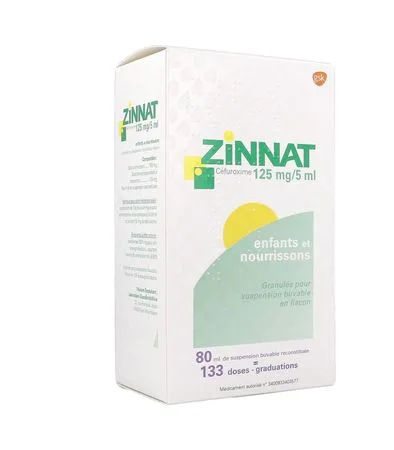
ZINNAT 125 mg/5 ml CHILDREN AND INFANTS, granules for oral suspension in bottle
Composition
For 5 ml of reconstituted suspension :
Cefuroxime axetil: 150,00 mg
Quantity corresponding to cefuroxime: 125,00 mg
Excipients with known effect:
One dose of 5 ml oral suspension contains 0,021 g of aspartame (E951), 3,1 g of sucrose, 6 mg of propylene glycol (E1520) and 4,5 mg of benzyl alcohol (E1519).
Aspartame (E951), xanthan gum, acesulfame potassium (E950), povidone K30, stearic acid, sucrose, flavouring Tutti Frutti (contains propylene glycol (E1520) and benzyl alcohol (E1519)), purified water.
Indications
ZINNAT is indicated for the treatment of the following infections in adults and in children from 3 months of age (see sections Warnings and precautions and Pharmacodynamics).
• Acute streptococcal tonsillitis and pharyngitis.
• Acute bacterial sinusitis.
• Acute otitis media.
• Acute exacerbations of chronic obstructive bronchopneumopathy.
• Cystitis.
• Pyelonephritis.
• Uncomplicated skin and soft tissue infections.
• Treatment of early-stage Lyme disease.
Official recommendations concerning the appropriate use of antibacterial agents should be taken into account.
Dosage and administration
Dosage
The usual duration of treatment is seven days (may vary from five to ten days). The dose of cefuroxime selected to treat an individual infection must take into account:
• the expected pathogens and their probable susceptibility to cefuroxime axetil;
• the severity and site of the infection;
• the patient's age, weight and renal function, as indicated below.
The duration of treatment must be determined by the type of infection and the patient's response and should generally not exceed the recommended duration.
Table 1: Adults and children (≥ 40 kg)
|
Indication |
Dose to be administered |
|
Acute tonsillitis and pharyngitis, acute bacterial sinusitis |
250 mg twice a day |
|
Acute otitis media |
500 mg twice a day |
|
Acute exacerbations of chronic obstructive pulmonary disease |
500 mg twice a day |
|
Cystitis |
250 mg twice a day |
|
Pyelonephritis |
250 mg twice a day |
|
Uncomplicated skin and soft tissue infections |
250 mg twice a day |
|
Lyme disease |
500 mg twice a day for 14 days (may vary from 10 to 21 days) |
Table 2: Children (< 40 kg) (see also Tables 3 and 4)
|
Indication |
Dosage |
|
Acute tonsillitis and pharyngitis |
10 mg/kg twice a day, up to a maximum of 250 mg twice a day |
|
Acute otitis media |
15 mg/kg twice a day, up to a maximum of 250 mg twice a day |
|
Acute bacterial sinusitis |
10 mg/kg twice a day, up to a maximum of 250 mg twice a day |
|
Cystitis |
15 mg/kg twice a day, up to a maximum of 250 mg twice a day |
|
Pyelonephritis |
15 mg/kg twice a day, up to a maximum of 250 mg twice a day for 10 to 14 days |
|
Uncomplicated skin and soft tissue infections |
15 mg/kg twice a day, up to a maximum of 250 mg twice a day |
|
Lyme disease |
15 mg/kg twice a day, up to a maximum of 250 mg twice a day for 14 days (between 10 and 21 days) |
There are no data on the use of ZINNAT in children under 3 months of age.
In infants (from 3 months of age) and children weighing less than 40 kg, it may be preferable to adjust the dose according to body weight.
Cefuroxime axetil tablets and cefuroxime axetil granules for oral suspension are not bioequivalent and are not interchangeable on a milligram-per-milligram comparative basis (see section Pharmacokinetics).
To improve compliance and dosing accuracy in very young children, an oral dosing syringe is supplied with the multi-dose vial.
If necessary, the oral dosing syringe may also be used in older children (refer to the dosage tables below).
For a dose of 10mg/kg, the volume in ml to be administered to a child of "Weight" kg with the 125 mg/5 ml oral suspension is: (10 x child's weight in kg x 5) /125.
Some examples of doses calculated for use of the paediatric oral dosing syringe, expressed in ml or mg based on the child's body weight in kg, are shown in the table below.
Table 3: Dose of 10 mg/kg/dose (using the paediatric oral dosing syringe)
|
Child's weight (kg) |
Dose (in mg) to be administered twice daily |
Volume of oral suspension per dose (in ml) to be administered twice daily with the 125 mg/5 ml presentation |
|
4 |
40 |
1,6 |
|
6 |
60 |
2,4 |
|
8 |
80 |
3,2 |
|
10 |
100 |
4,0 |
|
12 |
120 |
4,8 |
|
14 |
140 |
5,6 |
For a dosage of 15mg/kg, the quantity of ml to be administered to a child of "Weight" kg with the 125 mg/5 ml oral suspension is: (15 x child's weight in kg x 5) /125.
Some examples of doses calculated for the paediatric dosing syringe for oral administration, expressed in ml or in mg based on the child's body weight in kg, are shown in the table below.
Table 4: Dosage of 15 mg/kg/dose (using the paediatric dosing syringe for oral administration)
|
Child's weight (kg) |
Dose (in mg) to be administered twice daily |
Volume of oral suspension per dose (in ml) to be administered twice daily with the 125 mg/5 ml presentation |
|
4 |
60 |
2,4 |
|
6 |
90 |
3,6 |
|
8 |
120 |
4,8 |
|
10 |
150 |
6,0 |
|
12 |
180 |
7,2 |
|
14 |
210 |
8,4 |
Renal impairment
The safety and efficacy of cefuroxime axetil in patients with renal impairment have not been established.
Cefuroxime is primarily eliminated by the kidneys. In patients with renal impairment, it is recommended to reduce the dose of cefuroxime to compensate for slower elimination. Cefuroxime is effectively eliminated by dialysis.
Table 5: Recommended doses of ZINNAT in case of renal impairment
|
Creatinine clearance |
T1/2 (hours) |
Recommended doses |
|
≥ 30 ml/min/1,73 m2 |
1,4 - 2,4 |
No dose adjustment necessary (standard dose of 125 mg to 500 mg administered twice daily) |
|
10 to 29 ml/min/1,73 m2 |
4,6 |
Standard individual dose administered every 24 hours |
|
< 10 ml/min/1,73 m2 |
16,8 |
Standard individual dose administered every 48 hours |
|
During haemodialysis |
2 - 4 |
A single additional standard individual dose must be administered at the end of each dialysis session. |
Hepatic impairment
No data are available in patients with hepatic impairment. As cefuroxime is mainly eliminated by the kidneys, impaired hepatic function should not alter the pharmacokinetics of cefuroxime.
Method of administration
Oral use.
For optimal absorption, the cefuroxime axetil suspension must be taken with food.
For instructions on reconstitution of the medicinal product before administration, see section Disposal and handling.
Other presentations are available, depending on the dosage.
Contraindications
Hypersensitivity to cefuroxime or to any of the excipients listed in section Composition.
Patients with known hypersensitivity to antibiotics of the cephalosporin family.
History of severe hypersensitivity (for example, anaphylactic reaction) to any other type of beta-lactam antibacterial agent (penicillins, monobactams and carbapenems).
Warnings and precautions
Hypersensitivity reactions
Patients who have previously had an allergic reaction to penicillins or other beta-lactam antibiotics require particular attention because of the risk of cross-sensitivity. As with all beta-lactam antibiotics, serious and sometimes fatal hypersensitivity reactions have been reported. Cases of hypersensitivity reactions progressing to Kounis syndrome (acute allergic coronary artery spasm that may lead to myocardial infarction) have been reported (see section Adverse effects). If severe hypersensitivity reactions occur, treatment with cefuroxime must be stopped immediately and appropriate emergency measures must be initiated.
Before starting treatment, it is necessary to check whether the patient has a history of severe hypersensitivity reactions to cefuroxime, to other cephalosporin antibiotics or to beta-lactams. Caution is required when administering cefuroxime to patients with a history of non-severe hypersensitivity to other beta-lactam antibiotics.
Severe cutaneous adverse reactions (SCARs)
Severe cutaneous adverse reactions including: Stevens-Johnson syndrome (SJS), Lyell syndrome (toxic epidermal necrolysis (TEN)) and drug reaction with eosinophilia and systemic symptoms (DRESS), which may be life-threatening or fatal, have been reported in association with cefuroxime treatment (see section Adverse effects).
At the time of prescription, patients must be informed of the signs and symptoms and closely monitored for any skin reaction. If signs and symptoms suggestive of these reactions appear, cefuroxime must be stopped immediately and an alternative treatment should be considered. If the patient has developed a severe reaction such as Stevens-Johnson syndrome, Lyell syndrome or DRESS with the use of cefuroxime, treatment with cefuroxime must never be resumed in this patient.
Jarisch-Herxheimer reaction
The Jarisch-Herxheimer reaction has been observed following treatment of Lyme disease with cefuroxime axetil. This reaction results directly from the bactericidal activity of cefuroxime axetil on the bacterium responsible for Lyme disease, the spirochete Borrelia burgdorferi. Patients should be reassured by being informed that this is a common consequence of antibiotic treatment of Lyme disease and usually resolves spontaneously (see section Adverse effects).
Proliferation of non-susceptible micro-organisms
As with other antibiotics, use of cefuroxime axetil may lead to overgrowth of Candida. Prolonged use may also lead to overgrowth of other non-susceptible micro-organisms (for example, enterococci and Clostridioides difficile), which may require discontinuation of treatment (see section Adverse effects).
Cases of antibiotic-associated pseudomembranous colitis, with severity ranging from mild to life-threatening, have been reported with almost all antibacterial agents, including cefuroxime.
This diagnosis should be considered in patients presenting with diarrhoea during or after treatment with cefuroxime (see section Adverse effects). Discontinuation of cefuroxime treatment and administration of specific treatment against Clostridioides difficile should be considered. Medicinal products that inhibit intestinal peristalsis must not be administered (see section Adverse effects).
Interference with diagnostic tests
The positive Coombs test observed following the use of cefuroxime may interfere with blood compatibility tests (see section Adverse effects).
Since a falsely negative result may occur during tests using ferricyanide, it is recommended to use the glucose oxidase or hexokinase method for determining blood/plasma glucose levels in patients receiving cefuroxime axetil.
Important information about excipients
This medicine contains 0,021 g of aspartame (E951) per 5 ml dose of reconstituted oral suspension. Aspartame is a source of phenylalanine. This medicine should therefore be used with caution in patients with phenylketonuria.
This medicine contains 3,1 g of sucrose per 5 ml dose of reconstituted oral suspension. Patients with fructose intolerance, glucose-galactose malabsorption syndrome or sucrase-isomaltase insufficiency (rare hereditary diseases) should not take this medicine.
The sucrose content of the cefuroxime axetil suspension should be taken into account when treating patients with diabetes, and appropriate advice should be given to them.
This medicine contains 6 mg of propylene glycol (E1520) per 5 ml dose of reconstituted oral suspension.
This medicine contains 4,5 mg of benzyl alcohol (E1519) per 5 ml dose of reconstituted oral suspension. Benzyl alcohol may cause allergic reactions. Benzyl alcohol should be used with caution in patients with renal or hepatic impairment, or in pregnant or breastfeeding women, due to the risk of accumulation and toxicity (metabolic acidosis). Large volumes of benzyl alcohol should be used with caution and only if necessary, particularly in subjects with hepatic or renal impairment due to the risk of accumulation. In addition, use of the cefuroxime axetil suspension for more than one week in young children (under 3 years) should be avoided, unless clinically necessary, due to the risk of accumulation.
Interactions
Medicinal products that reduce gastric acidity may lead to a decrease in the bioavailability of cefuroxime axetil, compared with that observed under fasting conditions, and tend to cancel out the improvement in absorption obtained after food intake.
Cefuroxime is eliminated by glomerular filtration and tubular secretion. Concomitant use of probenecid is not recommended. Concomitant administration of probenecid significantly increases the peak concentration, the area under the serum concentration-time curve and the elimination half-life of cefuroxime.
Concomitant use of oral anticoagulants may lead to an increase in the International Normalized Ratio (INR).
Fertility, pregnancy and breastfeeding
Pregnancy
Data on the use of cefuroxime in pregnant women are limited. Animal studies have not shown harmful effects on gestation, embryonic or foetal development, parturition or post-natal development. ZINNAT should be prescribed to pregnant women only if the benefit outweighs the risk.
Breast-feeding
Cefuroxime is excreted poorly in breast milk. Occurrence of adverse effects at therapeutic doses is not expected, although a risk of diarrhoea and mucosal fungal infection cannot be excluded. These adverse effects may require discontinuation of breastfeeding. The possibility of sensitisation must be taken into account. The use of cefuroxime during breastfeeding should only be considered after a physician has assessed the benefit/risk ratio.
Fertility
No data are available concerning the effects of cefuroxime axetil on fertility in humans. Animal reproduction studies have not shown an effect on fertility.
Driving and using machines
No studies on the effects of cefuroxime on the ability to drive vehicles and use machines have been performed. However, as this medicine may cause dizziness, patients should be advised to be cautious when driving vehicles or using machines.
Adverse effects
The most frequent undesirable effects are the proliferation of Candida, eosinophilia, headache, dizziness, gastrointestinal disorders and transient elevation of liver enzymes.
The frequency categories assigned to the undesirable effects below are, for most effects, estimates due to the absence of appropriate data (for example, from controlled clinical studies versus placebo) for calculating incidences. In addition, the incidence of undesirable effects associated with cefuroxime axetil may vary depending on the indication.
Data from large-scale clinical trials were used to determine the frequency of undesirable effects from very common to rare. The frequencies assigned to all other undesirable effects (i.e., those occurring at a frequency < 1/10 000) were mainly determined on the basis of data collected since marketing and correspond to a reporting rate rather than an actual frequency. Data from controlled trials versus placebo were not available. When incidences were calculated from clinical trial data, they were based on undesirable effects judged to be related to treatment (based on the investigator's assessment). Within each frequency group, undesirable effects are presented in order of decreasing seriousness.
Treatment-related undesirable effects, regardless of grade, are listed below by system organ class, by frequency and by severity. The following convention was used for classifying frequencies: very common ≥ 1/10 ; common ≥ 1/100 to < 1/10, uncommon ≥ 1/1 000 to < 1/100 ; rare ≥ 1/10 000 to < 1/1 000 ; very rare < 1/10 000 and frequency not known (cannot be estimated from the available data).
|
System organ class |
Common |
Uncommon |
Frequency not known |
|
Infections and infestations |
Proliferation of Candida
|
|
Proliferation of Clostridioides difficile |
|
Blood and lymphatic system disorders |
Eosinophilia |
Positive Coombs test, thrombocytopenia, leukopenia (sometimes severe) |
Haemolytic anaemia |
|
Cardiac disorders |
|
|
Kounis syndrome |
|
Immune system disorders |
|
|
Drug fever, serum sickness, anaphylaxis, Jarisch-Herxheimer reaction |
|
Nervous system disorders |
Headache, dizziness |
|
|
|
Gastrointestinal disorders |
Diarrhoea, nausea, abdominal pain |
Vomiting |
Pseudomembranous colitis (see section Warnings and precautions) |
|
Hepatobiliary disorders |
Transient elevation of hepatic enzyme levels |
|
Jaundice (mainly cholestatic jaundice), hepatitis |
|
Skin and subcutaneous tissue disorders |
|
Skin rash |
Urticaria, pruritus, erythema multiforme, Stevens-Johnson syndrome, toxic epidermal necrolysis (exanthematous necrolysis) (see Immune system disorders), angioneurotic oedema, drug reaction with eosinophilia and systemic symptoms (DRESS) |
|
Description of selected adverse reactions Cephalosporin antibiotics tend to be absorbed onto the surface of red blood cell membranes and react with antibodies directed against the drug, thereby leading to a positive Coombs test (which may interfere with blood compatibility testing) and, in very rare cases, to haemolytic anaemia. A transient elevation of serum hepatic enzyme levels has been observed and was usually reversible. |
|||
Paediatric population
The safety profile of cefuroxime axetil in children is consistent with that in adults.
Reporting of suspected adverse reactions
Reporting suspected adverse reactions after authorisation of the medicinal product is important. It allows continued monitoring of the benefit/risk balance of the medicinal product. Healthcare professionals are asked to report any suspected adverse reactions via the national reporting system: National Agency for the Safety of Medicines and Health Products (ANSM) and the network of Regional Pharmacovigilance Centres - Website: https://signalement.social-sante.gouv.fr.
Overdose
Overdose may lead to neurological sequelae, including encephalopathy, convulsions and coma. Symptoms of overdose may occur if the dosage is not appropriately reduced in patients with impaired renal function (see sections Dosage and administration and Warnings and precautions).
Serum cefuroxime levels may be reduced by haemodialysis and by peritoneal dialysis.
Pharmacodynamics
Pharmacotherapeutic class: Antibacterials for systemic use, second-generation cephalosporins, ATC code: J01DC02.
Mechanism of action
Cefuroxime axetil is hydrolysed by esterase enzymes to an active antibiotic, cefuroxime.
Cefuroxime inhibits bacterial cell wall synthesis following its binding to penicillin-binding proteins (PBPs). This results in interruption of the biosynthesis of the bacterial cell wall (peptidoglycans), which causes lysis and death of the bacterium.
Resistance mechanism
Bacterial resistance to cefuroxime may be due to one or more of the following mechanisms:
• hydrolysis by beta-lactamases including (but not limited to) extended-spectrum beta-lactamases (ESBLs) and by AmpC enzymes that may be inducible or undergo stable derepression in certain aerobic Gram-negative bacterial species;
• reduced affinity of penicillin-binding proteins for cefuroxime;
• impermeability of the outer membrane, limiting access of cefuroxime to penicillin-binding proteins in Gram-negative bacteria;
• bacterial efflux pumps.
Bacteria with acquired resistance to other injectable cephalosporins are likely to be resistant to cefuroxime.
Depending on the resistance mechanism, bacteria with acquired resistance to penicillins may show reduced susceptibility or resistance to cefuroxime.
Breakpoints for cefuroxime axetil
The minimum inhibitory concentration (MIC) breakpoints established by the "European Committee on Antimicrobial Susceptibility Testing" (EUCAST) version 13, in force from 1er January 2023, are as follows:
|
Microorganism |
Susceptibility breakpoints (mg/L) |
|
|
|
S ≤ |
R > |
|
Enterobacterales 1, 2 |
8 |
8 |
|
Staphylococcus spp. spp. |
Remark3 |
Remark3 |
|
Streptococcus of groups A, B, C and G |
Remark4 |
Remark4 |
|
Streptococcus pneumoniae |
0,25 |
0,25 |
|
Haemophilus influenzae |
0,001 |
1 |
|
Moraxella catarrhalis |
0,001 |
4 |
|
1 The breakpoints for cephalosporins for Enterobacterales will detect any resistance mechanism of clinical significance (including ESBLs and plasmid-mediated AmpC enzymes). Certain beta-lactamase-producing isolates are susceptible to second- or third-generation cephalosporins at these breakpoints and should be reported as such, i.e., the presence or absence of an ESBL does not interfere with the categorisation of the clinical isolate. Detection and characterisation of an ESBL are recommended for public health and infection control purposes. 3th or 4th generation at these breakpoints and should be reported as such, i.e., the presence or absence of an ESBL does not interfere with the categorisation of the clinical isolate. Detection and characterisation of an ESBL are recommended for public health and infection control purposes. 2 Uncomplicated urinary tract infections only, E. coli, Klebsiella spp. (except K. aerogenes), Raoultella spp. and P. mirabilis. 3 The susceptibility of staphylococci to cephalosporins is inferred from the susceptibility to cefoxitin, except for cefixime, ceftazidime, ceftazidime-avibactam, ceftibuten and ceftolozane-tazobactam, for which there are no critical values and which should not be used for staphylococcal infections. For substances administered orally, care should be taken to ensure sufficient exposure at the site of infection. If cefotaxime and ceftriaxone are reported for methicillin-susceptible staphylococci, they must be reported as "Susceptible, increased exposure" (I). Some methicillin-resistant S. aureus are susceptible to ceftaroline and ceftobiprole. aureus Some methicillin-resistant staphylococci are susceptible to ceftaroline and ceftobiprole. 4 The susceptibility of group A, B, C and G streptococci to cephalosporins is inferred from the susceptibility to benzylpenicillin. A minimum inhibitory concentration (MIC) with a comment but without an associated S or R category may be reported. |
||
S = susceptible, standard doses; I = intermediate, increased exposure; R = resistant
Microbiological susceptibility
The prevalence of acquired resistance may vary by geographical area and over time for certain species. Local information on resistance is therefore useful, particularly for the treatment of severe infections.
Expert opinion may be necessary when the local prevalence of resistance is such that the usefulness of cefuroxime axetil in at least some types of infections is questionable.
Cefuroxime is usually active against the following microorganisms in vitro.
|
Commonly susceptible species |
|
Aerobic Gram-positive: Staphylococcus aureus (methicillin-susceptible)* Staphylococcus spp. coagulase-negative (methicillin-susceptible) Streptococcus pyogenes Streptococcus agalactiae |
|
Gram-negative aerobes : Haemophilus influenzae Haemophilus parainfluenzae Moraxella catarrhalis |
|
Spirochetes: Borrelia burgdorferi |
|
Species with variable susceptibility |
|
Aerobic Gram-positive: Streptococcus pneumoniae |
|
Aerobic Gram-negative: Citrobacter freundii Klebsiella aerogenes Enterobacter cloacae Escherichia coli Klebsiella pneumoniae Proteus mirabilis Proteus spp. (other than P. vulgaris) Providencia spp. |
|
Gram-positive anaerobes: Peptostreptococcus spp. Propionibacterium spp. |
|
Gram-negative anaerobes: Fusobacterium spp. Bacteroides spp. |
|
Naturally resistant species |
|
Aerobic Gram-positive: Enterococcus faecalis Enterococcus faecium |
|
Aerobic Gram-negative: Acinetobacter spp. Campylobacter spp. Morganella morganii Proteus vulgaris Pseudomonas aeruginosa Serratia marcescens |
|
Gram-negative anaerobes: Bacteroides fragilis |
|
Other: Chlamydia spp. Mycoplasma spp. Legionella spp. |
* All S. aureus methicillin-resistant strains are resistant to cefuroxime.
Pharmacokinetics
Absorption
After oral administration, cefuroxime axetil is absorbed from the gastrointestinal tract and rapidly hydrolysed in the intestinal mucosa and blood to then release cefuroxime into the bloodstream. Absorption is optimal when administered shortly after a meal.
After administration of cefuroxime axetil tablets with food, peak serum levels (2,1 µg/ml for a dose of 125 mg, 4,1 µg/ml for a dose of 250 mg, 7,0 µg/ml for a dose of 500 mg and 13,6 µg/ml for a dose of 1 000 mg) are obtained approximately 2 to 3 hours after intake. The rate of absorption of cefuroxime in suspension form is reduced compared with tablets, resulting in lower and later serum peaks and reduced systemic bioavailability (4 to 17 % lower). Oral suspension of cefuroxime axetil is not bioequivalent to cefuroxime axetil tablets in healthy adults and is therefore not substitutable on a comparative milligram-per-milligram basis (see section Dosage and administration). The pharmacokinetics of cefuroxime are linear within the oral dosage range of 125 to 1 000 mg. No accumulation of cefuroxime occurred after repeated oral administration of doses ranging from 250 to 500 mg.
Distribution
Depending on the methodology used, a protein binding rate of 33 to 50 % was observed. After administration of a single dose of cefuroxime axetil in the form of a 500 mg tablet to 12 healthy volunteers, the apparent volume of distribution was 50 l (coefficient of variation (CV) % = 28 %). Cefuroxime concentrations above the minimum inhibitory concentrations for frequently involved pathogens can be achieved in the tonsils, sinus tissue, bronchial mucosa, bone, pleural, joint, synovial and interstitial fluids, bile, sputum and aqueous humour. Cefuroxime crosses the blood-brain barrier when the meninges are inflamed.
Biotransformation
Cefuroxime is not metabolised.
Elimination
The serum half-life is between 1 and 1,5 hours. Cefuroxime is eliminated by glomerular filtration and tubular secretion. Renal clearance is approximately 125 to 148 ml/min/1,73 m2.
Special patient populations
Sex
No difference in the pharmacokinetics of cefuroxime has been observed between men and women.
Elderly patients
No special precautions are necessary in elderly patients with normal renal function at dosages up to the normal maximum dose of 1 g per day. Elderly patients are more likely to have decreased renal function. Therefore, the dosage should be adjusted according to the renal function of the elderly subject (see section Dosage and administration).
Paediatric population
In infants (aged > 3 months) and children, the pharmacokinetics of cefuroxime are similar to those observed in adults.
No clinical trial data on the use of cefuroxime axetil in children under 3 months are available.
Renal impairment
The safety and efficacy of cefuroxime axetil in patients with renal impairment have not been established.
Cefuroxime is mainly excreted by the kidneys. Therefore, as with all antibiotics of this type, it is recommended to reduce the dose of cefuroxime to compensate for slower elimination in patients with severe renal impairment (namely Cl cr < 30 ml/minute) (see section Dosage and administration). Cefuroxime is effectively eliminated by dialysis.
Hepatic impairment
No data are available in patients with hepatic impairment. As cefuroxime is mainly eliminated by the kidneys, impaired hepatic function should not alter the pharmacokinetics of cefuroxime.
Pharmacokinetic/pharmacodynamic relationships
In the case of cephalosporins, it has been shown that the main PK/PD index correlated with efficacy in vivo is the percentage of the dosing interval (% T) during which the free concentration remains above the minimum inhibitory concentration (MIC) of cefuroxime for the individual target species (namely, % T > MIC).
Preclinical safety
Non-clinical data from safety pharmacology, repeated-dose toxicity, genotoxicity and reproductive and developmental toxicity studies revealed no particular risk for humans. No carcinogenicity studies have been performed; however, no data suggest carcinogenic potential.
In rats, urinary gamma glutamyl transpeptidase activity is inhibited by various cephalosporins; however, the level of inhibition is lower with cefuroxime. This may be important regarding interference with laboratory tests in humans.
INCOMPATIBILITIES
A positive Coombs test has been reported during treatment with cephalosporins – this phenomenon may interfere with blood compatibility testing.
Shelf life
Before reconstitution, the shelf life of ZINNAT, granules for oral suspension in bottle is 24 months from the date of manufacture.
The reconstituted suspension can be stored for up to 10 days in the refrigerator, between 2 and 8°C.
Special storage precautions
To be stored at a temperature not exceeding 30°C.
For more information on the storage conditions of ZINNAT, granules for oral suspension in bottle after reconstitution, see section Shelf life.
SPECIAL PRECAUTIONS FOR DISPOSAL AND OTHER HANDLING
Any unused medicinal product or waste material should be disposed of in accordance with local requirements.
Instructions for reconstitution and administration
Shake the bottle vigorously before using the medicine.
The reconstituted suspension can be stored for up to 10 days in the refrigerator, between 2 and 8°C.
If desired, the dose of ZINNAT suspension can be diluted again with cold fruit juices or cold milk-based drinks and must then be taken immediately.
Please note, the time required to prepare the ZINNAT suspension before administering the first dose will be more than one hour. This includes the time of " rest " of the suspension in the refrigerator
1. Shake the bottle to disperse the contents. Remove the bottle cap and the heat-sealed foil seal. If the latter is damaged or missing, the bottle must be returned to the pharmacist.
2. Pour the amount of cold water indicated on the bottle label or up to the graduation mark of the supplied dosing cup. If the water has previously been heated, wait for it to cool to room temperature before pouring it. Do not mix the ZINNAT oral suspension granules with boiling or hot liquids. Cold water must be used to prevent the suspension from becoming too thick.
3. Pour the total amount of cold water into the bottle. Replace the bottle cap. Leave the bottle upright until the granules have completely absorbed the water; this should take about one minute.
4. Turn the bottle over and shake well (for at least 15 seconds) until all the granules are mixed with the water.
5. Return the bottle to an upright position and shake well for at least one minute until the granules are completely dissolved.
Immediately store the ZINNAT suspension in the refrigerator at a temperature between 2 and 8°C (do not freeze) and leave to stand for at least one hour before using the first dose. The reconstituted suspension must be kept refrigerated at all times. When stored in the refrigerator between 2 and 8°C, the reconstituted suspension can be stored for up to 10 days.
Always shake the bottle well before use. An oral dosing syringe is provided to facilitate administration of each dose.
Instructions for using the oral dosing syringe
1. Remove the bottle cap and insert the syringe-adapter assembly into the neck of the bottle. Press fully until the adapter is firmly fitted to the neck. Turn the bottle and the oral dosing syringe upside down.
2. Pull back the plunger of the oral dosing syringe until the edge of the plunger lines up with the graduation corresponding to the required dose.
3. Return the bottle and the oral dosing syringe to an upright position. While holding the oral dosing syringe and the plunger to ensure the plunger stays in position, remove the oral dosing syringe from the bottle, leaving the plastic adapter in the neck of the bottle.
4. Place the tip of the oral dosing syringe into the mouth of the patient seated upright, directing it towards the inside of the cheek.
5. Slowly push the plunger of the oral dosing syringe to release the medicine, taking care that the patient does not choke. DO NOT squirt a jet of suspension into the mouth.
6. After administering the dose, replace the bottle cap without removing the plastic adapter. Remove the oral dosing syringe and plunger and wash them carefully with drinking water. Allow them to air dry.
The reconstituted suspension or the granules must not be mixed with hot liquids.
Prescription, supply and reimbursement
| Marketing authorisation (AMM) |
|
| Price: |
|
9 PLACE MARIE-JEANNE BASSOT
92300 LEVALLOIS-PERRET
Tel: 01 49 64 48 00 Tel (Green number): 0800 455 799
serviceclient.pharmacie@sc-sandoz.com
https://www.sandoz.fr/contactez-nous/
Source: VIDAL · Updated on 11/11/2026. This information does not replace advice from a healthcare professional.