Professional product catalogue
Compresses & fixation
Compresses and fixation products provide complementary elements around a dressing. A compress supplies a textile support, while medical tapes and retention bandages primarily provide fixation. Their association does not make the product families identical. For pharmacy teams, separating material, adhesion, cohesion and stretch helps describe professional requirements accurately. This matters particularly where several individual components form one protective or care assembly, with each component retaining its own construction and presentation characteristics.
Products in this category
21 products
 Laboratoires Dermatologiques Eucerin
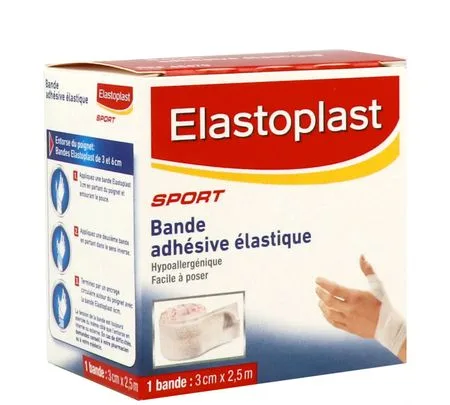
ELASTOPLAST Elastic adhesive bandage 3cmx2,5m
CIP / EAN : 4005800019234
 Molnlycke Health Care
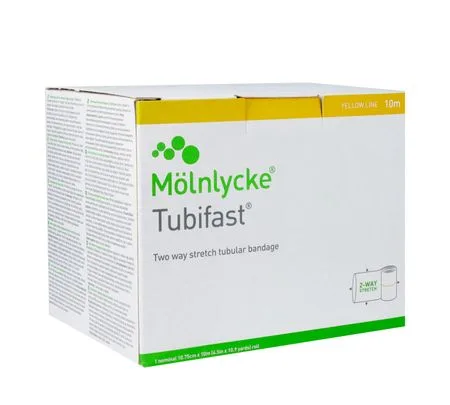
TUBIFAST 2-WAY STRETCH Yellow tubular bandage 10,75cmx10m B/1
CIP / EAN : 7333350379575
- Molnlycke Health Care
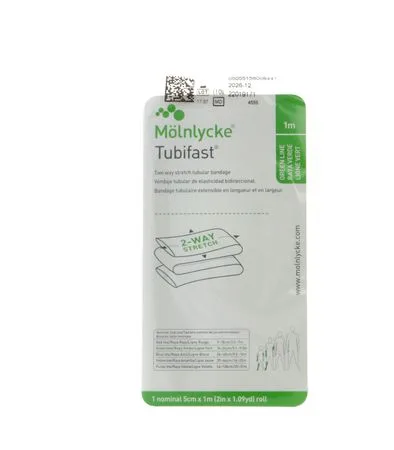
TUBIFAST 2-WAY STRETCH Purple tubular bandage 20cmx10m
CIP / EAN : 7332551880132

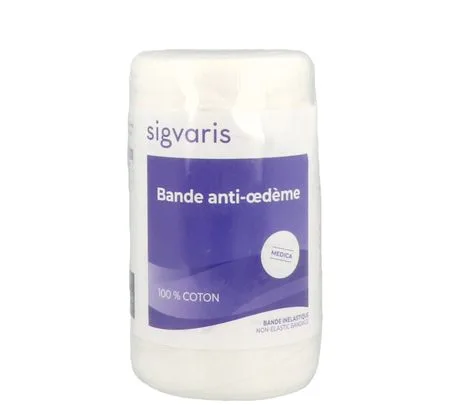

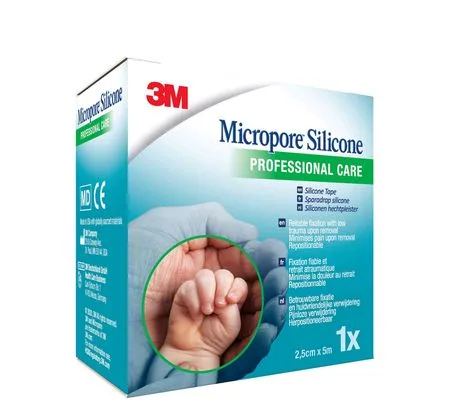

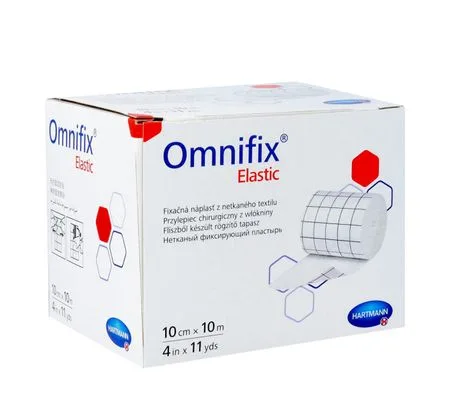





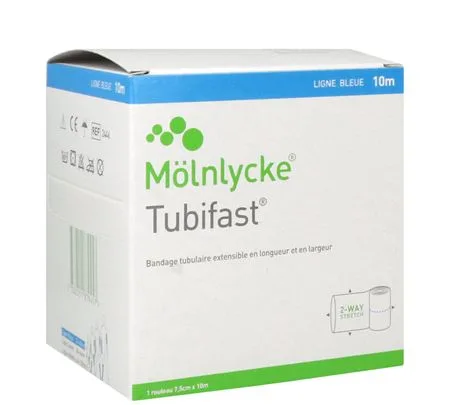
Understanding compresses & fixation
Gauze and nonwoven compresses
Gauze is woven material whose structure may be described by thread count. Nonwoven supports are assemblies of fibres, sometimes combining different materials. Ply count, material weight and dimensions add detail without creating one universal performance measure. Dry compresses also differ from impregnated supports. These distinctions explain why two white squares of the same size are not necessarily the same professional article. The nature of the fibres and the way they are assembled remain relevant independently of their external outline.
Tape backing and adhesive
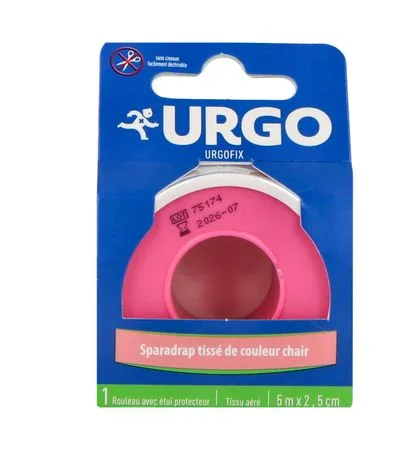
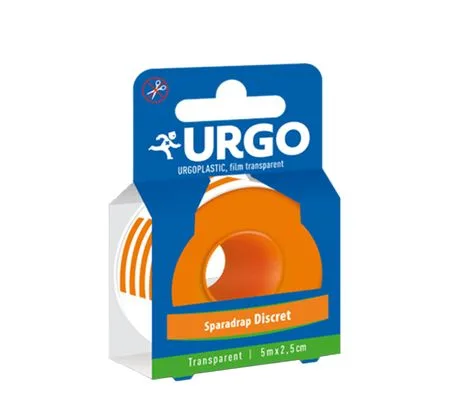
Medical tape combines a backing with an adhesive. The backing may be paper, nonwoven fabric, woven textile or film, according to the design. Adhesive is a separate component, so backing material does not identify its formula. Tape width, roll length, perforations and stretch direction describe different format features. A fixation tape does not automatically include a compress and should not be confused with a complete padded dressing. Its physical specification therefore starts with the two main components rather than colour alone.
Retention bandages and overlapping layers
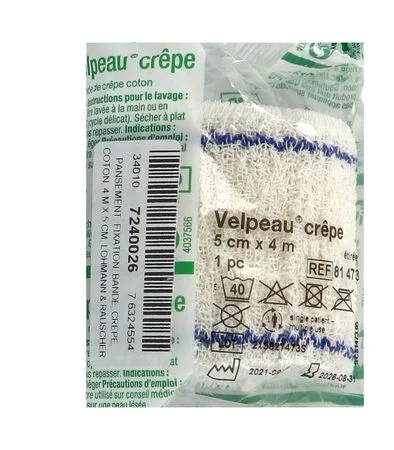
Retention bandages can hold an element without a skin adhesive. A cohesive bandage mainly attaches to itself, while another construction may require a separate closure. Stretch and cohesion are distinct properties. Resting length also differs from a length stated after stretching. This family remains separate from therapeutic compression bandages: elasticity alone does not establish a pressure or compression class. Understanding that boundary prevents a fixation description from becoming an unsupported statement about a different clinical function.
Sterile presentation and component assemblies
Sterility belongs to an explicitly declared presentation and its protective barrier. It does not follow from apparent cleanliness or a closed outer box. Overall dressing size, compress measurements and fixation width answer different technical questions. Describing an assembly therefore means identifying each component and its function. Material and contact compatibility cannot be assumed from one element alone. The same applies to sterile status, which remains distinct for separately supplied components even where they are intended to be used in a wider care arrangement.
Frequently asked questions
Do cohesive and adhesive mean the same thing?
No. Cohesion concerns layers of material attaching to one another, while a skin adhesive represents a different construction. The terms describe separate properties and are not interchangeable.
Does a sterile compress make a separate fixation product sterile?
No. Each component retains its own declared presentation characteristics. A sterile compress does not confer sterility on a separately supplied tape roll or retention bandage.
Updated 10 November 2026
Sources and further reading