Professional product catalogue
Adhesive dressings
Adhesive dressings combine a fixation area with a component intended to cover a small surface. Island designs include a backing, an adhesive and a separate central pad. Pre-cut shapes and strip formats differ in geometry. For pharmacy professionals, distinguishing overall measurements from pad dimensions provides a clearer understanding of the category. Backing material is another useful feature, since textile, nonwoven and film constructions are not identical even when their external shapes look similar.
Products in this category
86 products
 Smith & Nephew SAS
ALLEVYN LIFE Composite hydrocellular dressing 15,4x15,4cm B/16
CIP / EAN : 5000223478124
 Convatec
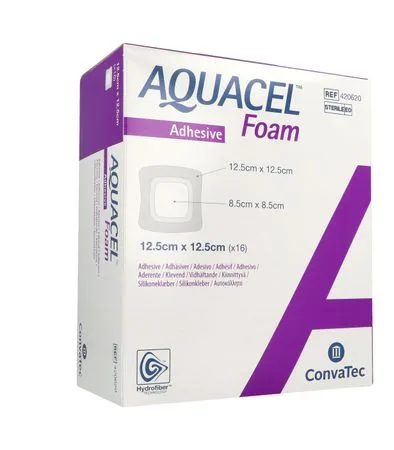
AQUACEL FOAM Hydrocellular adhesive sterile dressing 12,5x12,5cm B/16
CIP / EAN : 3701174002001
- Convatec
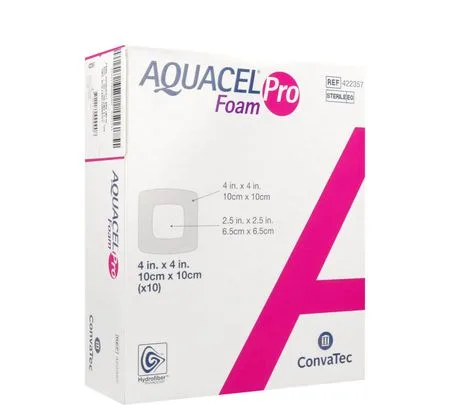
AQUACEL FOAM PRO Sterile adhesive hydrocellular dressing 10x10cm B/10
CIP / EAN : 3701174000908
 Coloplast
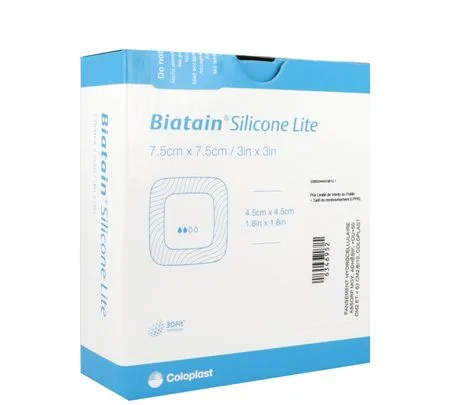
BIATAIN SILICONE LITE Alveolar hydrocellular dressing 7,5x7,5cm Box/10
CIP / EAN : 5708932530859
- Coloplast
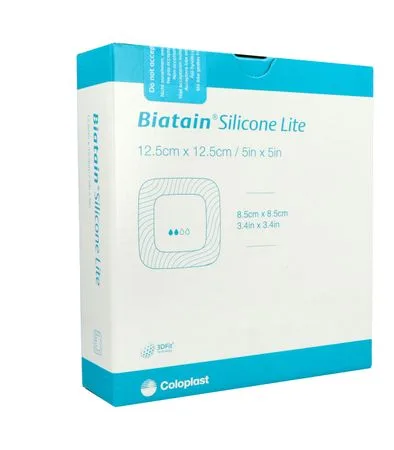
BIATAIN SILICONE LITE Pans hydrocellulaire alvéolé 12,5x12,5cm B/10
CIP / EAN : 5708932655170
Understanding adhesive dressings
Backing, pad and adhesive
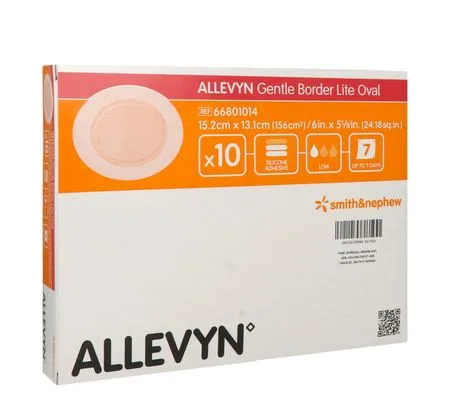
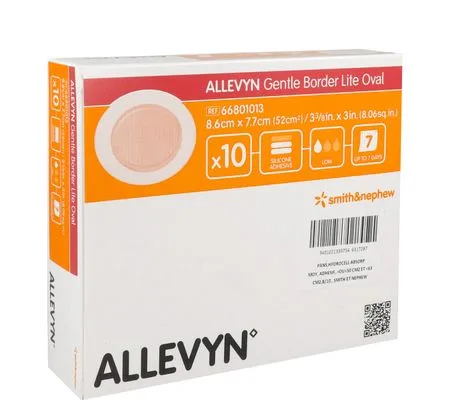
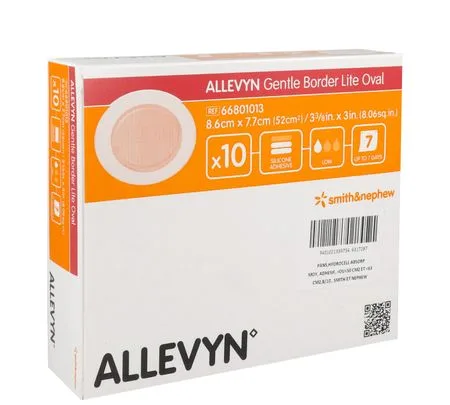
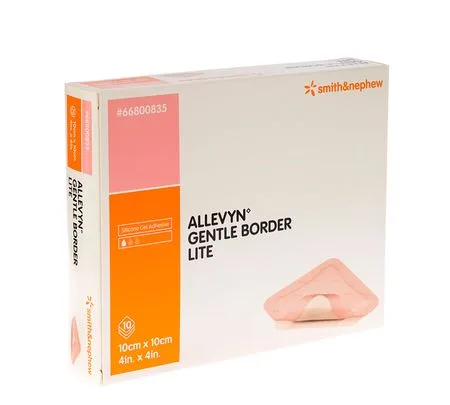
A backing may be woven textile, nonwoven material or film, depending on the design. The central pad has its own absorption and contact characteristics. Adhesive performs a separate function by providing peripheral fixation. These elements can be combined in different architectures. A thin, flexible dressing does not necessarily share the same materials as another of a similar colour. Its visible outline alone cannot identify the pad structure or the formulation of the adhesive underneath the protective liner.
Pre-cut formats and useful surfaces
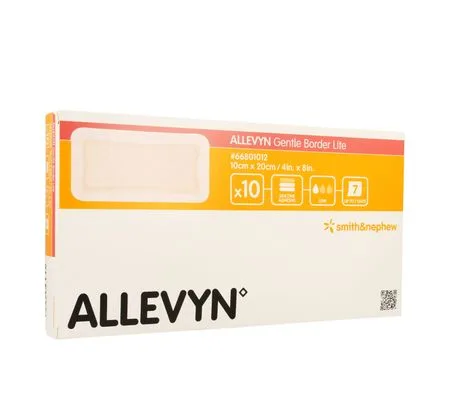
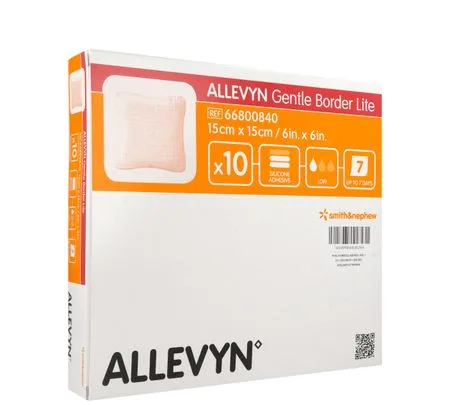
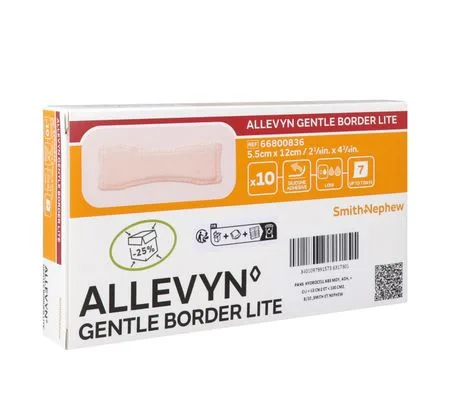
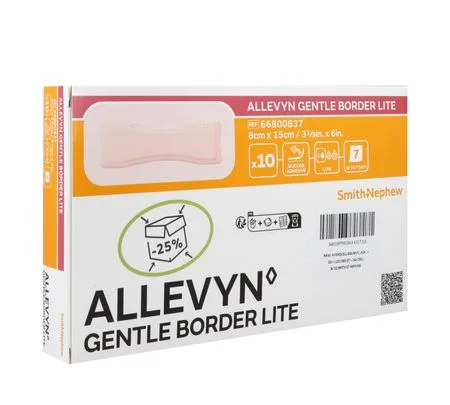
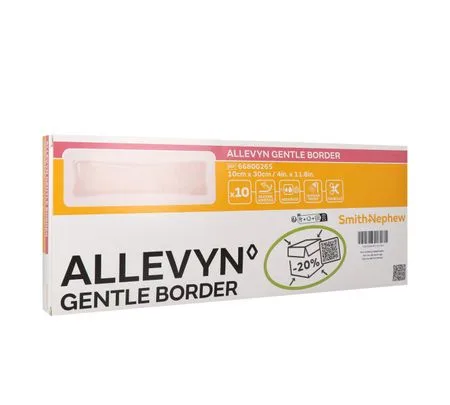
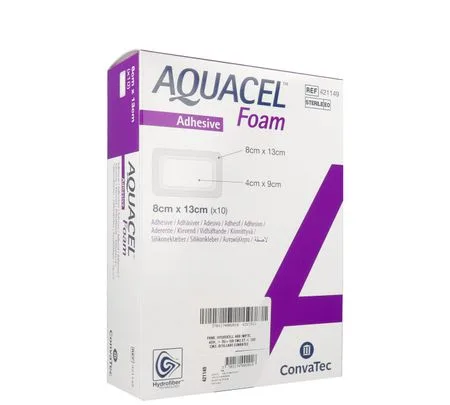
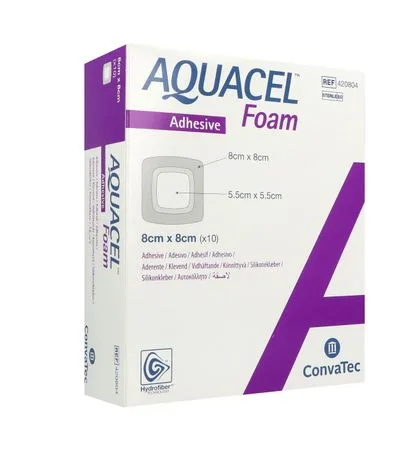
Long strips, rectangles and shaped designs have different geometries. Overall dimensions often include an adhesive area extending beyond the central pad. Length and width therefore do not always describe the compress itself. An assortment of several shapes also differs from a pack containing only one format. Pad and backing measurements are complementary specifications, especially when the same overall size is achieved through different pad-to-border proportions. The arrangement matters as much as the nominal external dimensions.
Sterility and water resistance
Adhesive describes fixation rather than guaranteeing sterility. Similarly, a film backing does not automatically establish water resistance under all conditions. Protective properties, contact characteristics and composition belong to the particular device. This family differs from skin closure strips, which have a role involving wound edges, and from medical tapes, which do not necessarily include a central absorbent pad. Keeping these structures separate avoids treating every item that adheres to skin as the same kind of first aid dressing.
Frequently asked questions
Does an adhesive dressing always contain a pad?
Common island designs do, but adhesive primarily describes fixation. The exact construction distinguishes a padded dressing from a film or another type of adhesive device.
Do overall measurements describe the pad’s coverage?
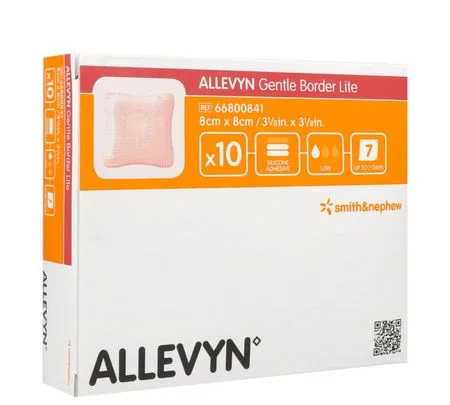
Not necessarily. Part of the area belongs to the peripheral adhesive border. The central pad and the complete backing can therefore have different dimensions.
Updated 10 November 2026
Sources and further reading