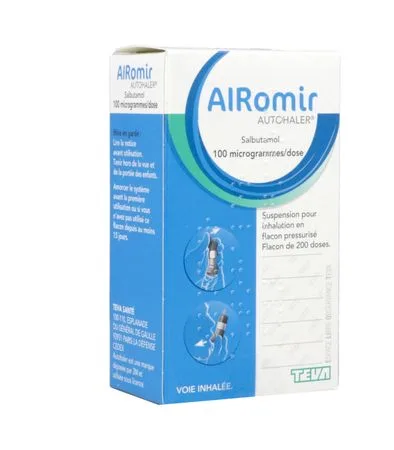
 Teva Santé
AIROMIR AUTOHALER 100 µg Suspension for inhalation in pressurised bottle Bottle/200doses
CIP / EAN : 3400934060335
Professional product catalogue
Asthma and chronic obstructive pulmonary disease, or COPD, medicines belong to several families acting on the airways. Bronchodilators, inhaled corticosteroids and other treatments do not have identical roles. This professional category explains mechanisms, combinations and inhalation systems. It preserves the distinction between a disease, a pharmacological class and a medicinal presentation: a device resembling another can contain a different ingredient, quantity or combination. Similar technology therefore does not establish an identical medicine or a shared indication across both conditions.
328 products
Teva SantéCIP / EAN : 3400934060335
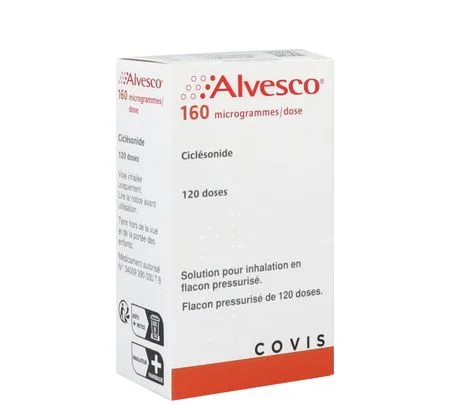
 Zentiva France
CIP / EAN : 3400939003078
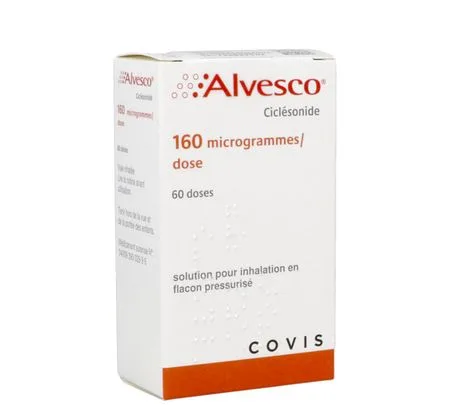 Zentiva France
CIP / EAN : 3400939002996
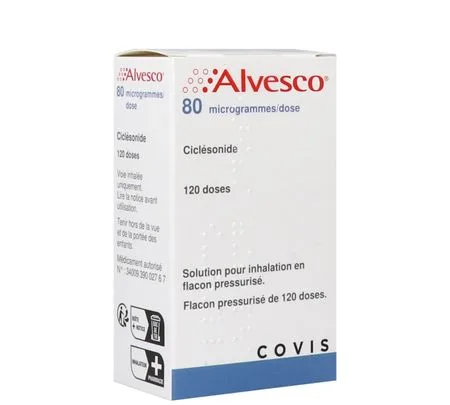 Zentiva France
CIP / EAN : 3400939002767
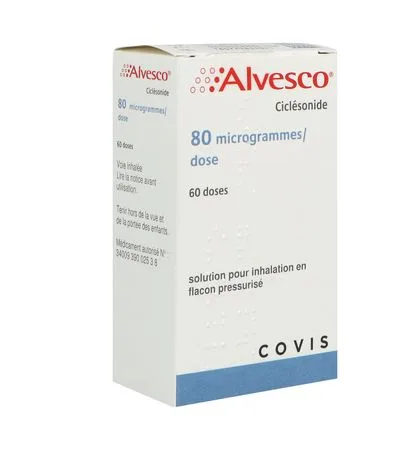 Zentiva France
CIP / EAN : 3400939002538
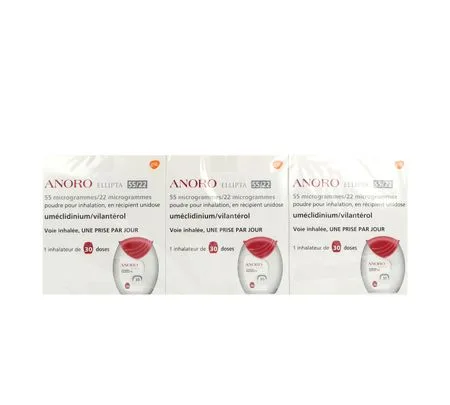
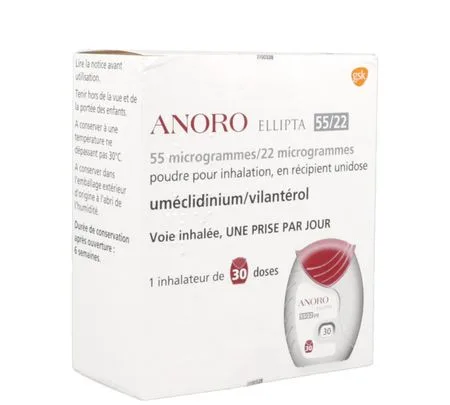
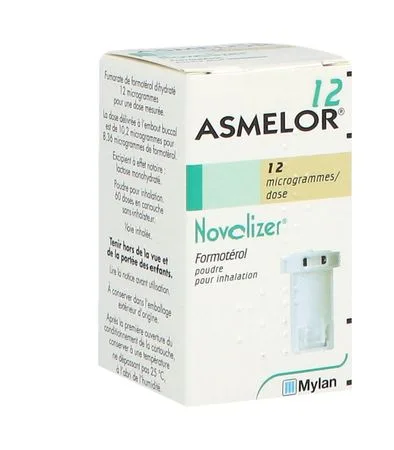
 Viatris Santé
CIP / EAN : 3400937672740
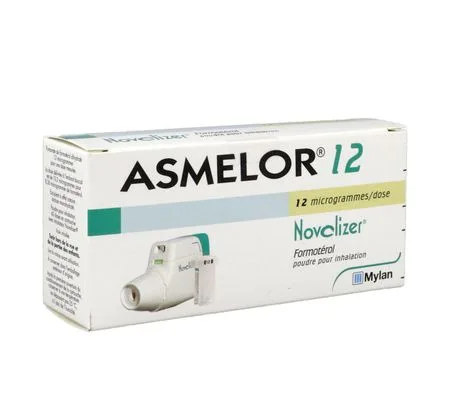 Viatris Santé
CIP / EAN : 3400937672689
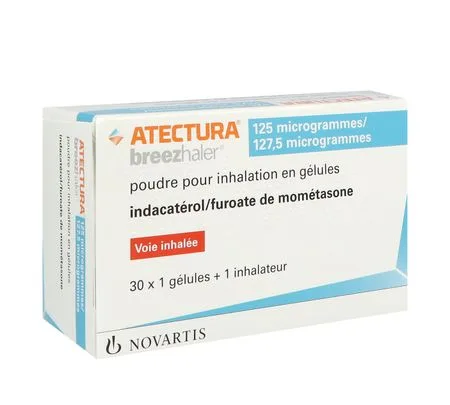
 Novartis Pharma SAS
CIP / EAN : 3400930207772
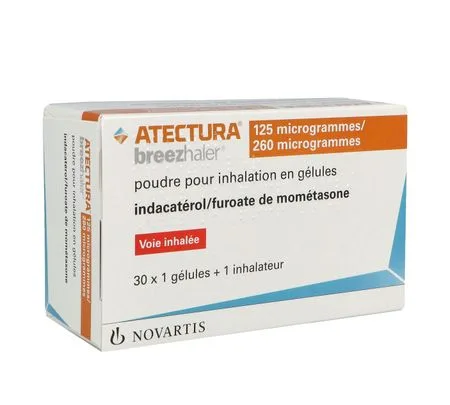
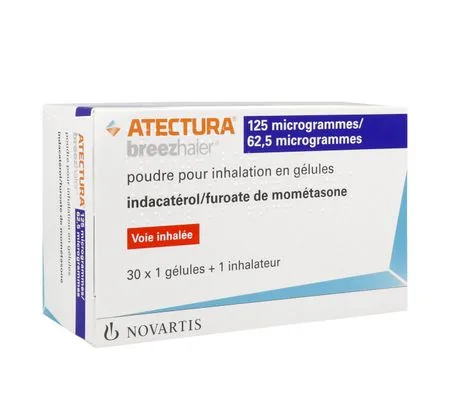
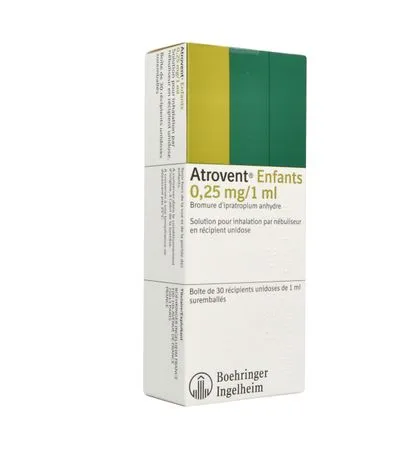
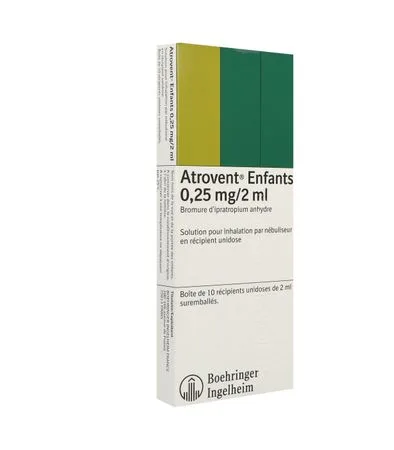
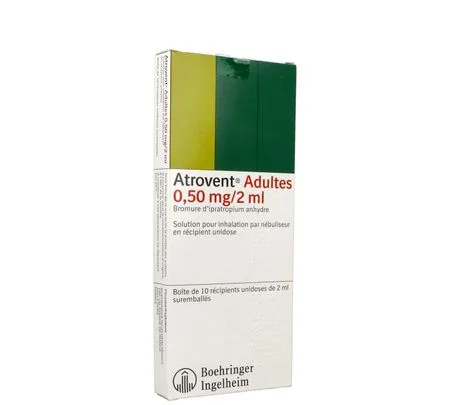
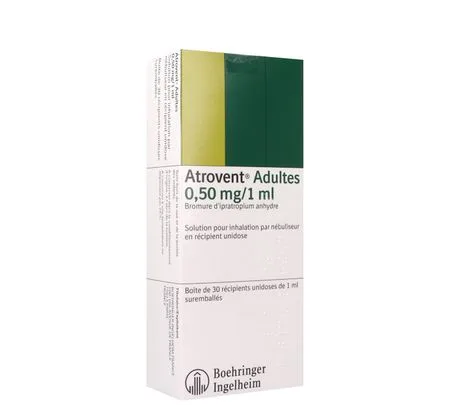
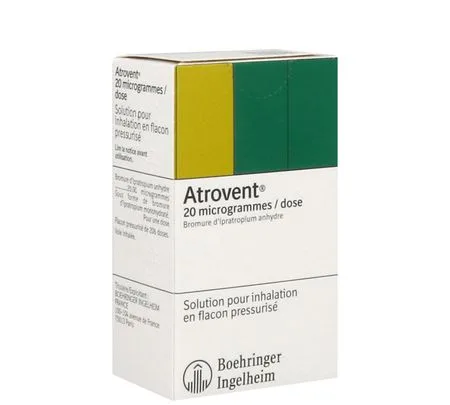
 Boehringer Ingelheim France SAS
CIP / EAN : 3400936079786
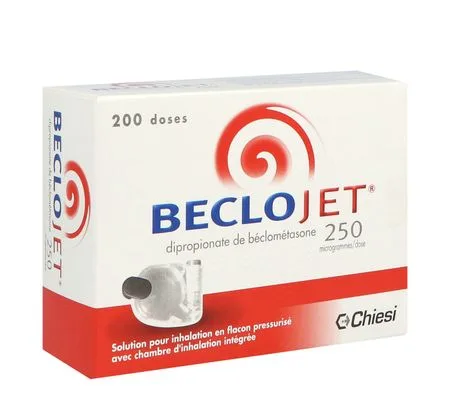
 Biogaran
CIP / EAN : 3400930313428
BiogaranCIP / EAN : 3400930313442
 EG Labo
CIP / EAN : 3400930313282
EG LaboCIP / EAN : 3400930313336
Bronchodilators influence airway calibre, whereas inhaled corticosteroids have anti-inflammatory activity. Beta-2 agonists and anticholinergics illustrate two bronchodilator families. Duration of action is another part of their description. Asthma and COPD are distinct diseases; the use of certain shared medicine families does not mean every product or combination has identical indications in both contexts. Pharmacological function and the individual product’s authorisation remain complementary. This distinction is useful when similar terms occur in discussions of respiratory symptoms but refer to different clinical roles.
Some presentations combine several bronchodilators or a bronchodilator with a corticosteroid. Complete composition and the quantity of each ingredient then define the preparation. Pressurised metered-dose inhalers, dry-powder devices and nebuliser solutions use different technologies. The device contributes to medicine delivery rather than serving only as packaging. Terms relating to a metered or delivered quantity need interpretation within the product’s own documentation, without deriving a conversion from similar appearance. The medicine and its delivery design together form the relevant presentation for professional identification.
A spacer, a nebuliser mask and an inhaler containing a medicinal product do not fulfil the same role. Accessories and medicines retain their respective categories. Separating them helps pharmacy teams understand the administration environment without assuming universal compatibility. System type, preparation characteristics and active-ingredient information provide precise reference points. They support identification of the medicine and associated equipment without becoming a technical instruction for an individual patient or suggesting that every accessory can be combined with every inhalation technology described within this respiratory category.
No. Bronchodilation and anti-inflammatory activity describe different functions. A medicine may combine them, but its full composition needs identification.
No. Inhalation technologies and their accessories differ. An inhaled route alone does not establish compatibility between a device and a spacer.
Updated 10 November 2026
Sources and further reading