
 Havea Pharma
CALMOSINE DIGESTION BIO S soothing drinkable natural plant extracts 12Unidoses/5ml
CIP / EAN : 3664391000123
Professional product catalogue
Digestive comfort encompasses several ingredient families: dietary fibre, live microorganisms and enzymes such as lactase. They relate to different processes, from fibre’s physical properties to the breakdown of a food sugar. Formulations may contain psyllium fibre, inulin, lactobacilli or bifidobacteria according to their composition. Understanding their nature distinguishes a substrate for the microbiota, a microorganism and a digestive enzyme within food supplements. These ingredients therefore bring different mechanisms to a formula rather than one common digestive action.
8 products
Havea PharmaCIP / EAN : 3664391000123




Fibre consists of food components whose digestion differs from that of absorbable sugars. Soluble fibres can interact with water, while insoluble fibres have different structural properties. Fermentability is another characteristic: some fibres provide substrates for intestinal microorganisms. Psyllium and inulin illustrate ingredients with different material characteristics. Viscosity and fermentation therefore describe two dimensions of fibre behaviour. The botanical origin and type of fibre help explain the ingredient rather than treating all powders as one uniform digestive material.
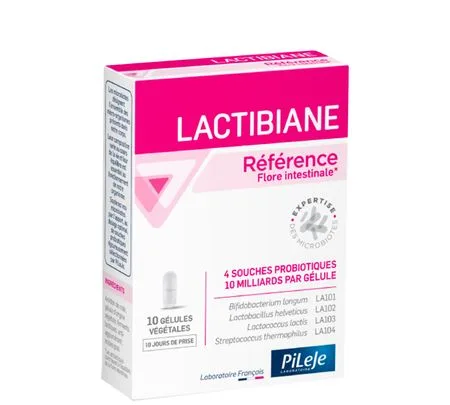
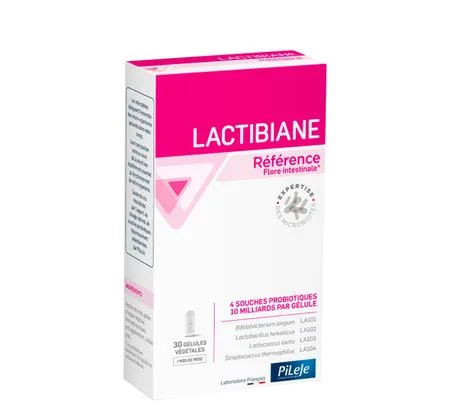
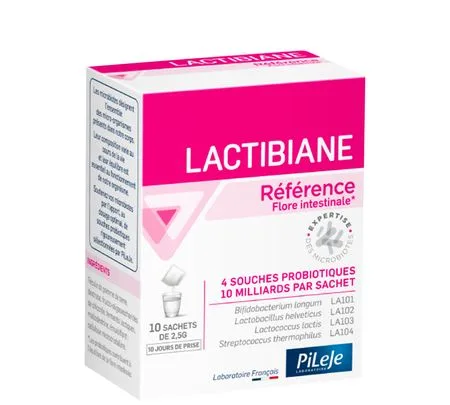
A prebiotic ingredient supplies a substrate used by certain microorganisms, whereas a microbial preparation supplies identified organisms. Lactobacilli and bifidobacteria belong to different groups. Full identity includes genus, species and strain because evidence for one strain remains specific to it. A multistrain combination therefore has its own composition rather than simply being a larger amount of one organism. Viability and storage conditions are also relevant to living ingredients and differ from the physical characteristics of a fibre substrate.
Lactose is a milk sugar made from glucose and galactose. Lactase is the enzyme that breaks it down into those two sugars. It therefore represents an ingredient family different from fibre and microbial cultures. A lactase preparation is understood through its enzyme activity and food-related purpose. That function concerns lactose, while milk proteins are different molecules associated with the mechanisms of food allergy. The sugar and protein distinction is central to explaining this particular digestive ingredient.
A preparation may combine fibres, cultures and other components, but each ingredient retains its role. Fibre is food material, a strain is an organism, and an enzyme catalyses a transformation. Powders, capsules and liquids provide different matrices for carrying those ingredients. A useful explanation therefore identifies the named components and their documented functions, together with the food claims belonging to the particular formulation. This composition-based approach keeps physical fibre properties, microbial identity and enzyme activity clear within the same broad subject.
The first concerns a substrate, while the second concerns documented live microorganisms. Their roles and composition characteristics differ even where they are combined in one preparation.
Its role is to break down lactose, which is a sugar. Milk proteins are different molecules, explaining the distinction between lactose digestion and allergy to dairy proteins.