Professional product catalogue
Reflux & acidity
Medicines for reflux and acidity belong to several classes addressing different processes. Acidity is a property of gastric contents, whereas reflux describes their movement back towards the oesophagus. This distinction explains terms such as antacid, alginate and proton pump inhibitor. The professional category brings together references in this digestive field, with particular attention to composition, formulation and the difference between a local effect on stomach contents and a reduction in the secretion of gastric acid.
Products in this category
325 products
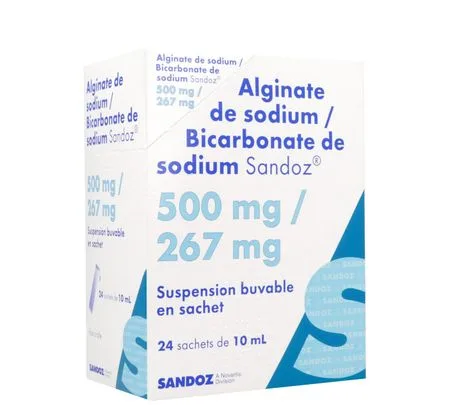
 Sandoz
SODIUM ALGINATE/SODIUM BICARBONATE SANDOZ 500 mg/267 mg Oral suspension sachet 24Sachet/10ml
CIP / EAN : 3400927927034
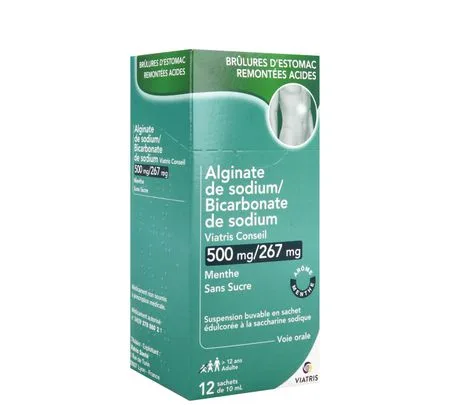
 Viatris Santé
SODIUM ALGINATE/SODIUM BICARBONATE VIATRIS Oral suspension sachet 24Sachet/10ml
CIP / EAN : 3400927909924















Understanding reflux & acidity
Reflux and gastric secretion
The stomach naturally produces acidic contents. When these move back into the oesophagus, they may be associated with burning or regurgitation. The amount of acid secreted and the movement of reflux therefore describe different mechanisms. Heartburn, regurgitation and gastro-oesophageal reflux have specific meanings in medicine information. Understanding this vocabulary helps pharmacy teams read the characteristics of a medicine without reducing the entire family to a single general expression such as a stomach-coating preparation or a digestive comfort product.
Distinct pharmaceutical mechanisms
Antacids neutralise acid already present. Alginates represent another approach, involving a physical barrier associated with the gastric contents. Proton pump inhibitors reduce acid secretion. Some medicinal formulations combine more than one substance. Describing a combination requires retaining all its components rather than attributing the complete formulation’s properties to each ingredient individually. These different mechanisms explain the value of understanding the pharmacological class before considering a particular medicine, and why related digestive terminology does not establish identical pharmaceutical properties.
Formulation and professional interpretation
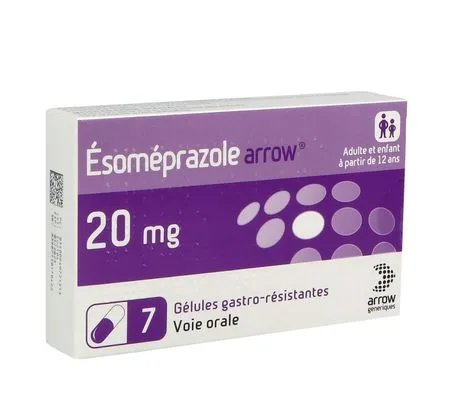
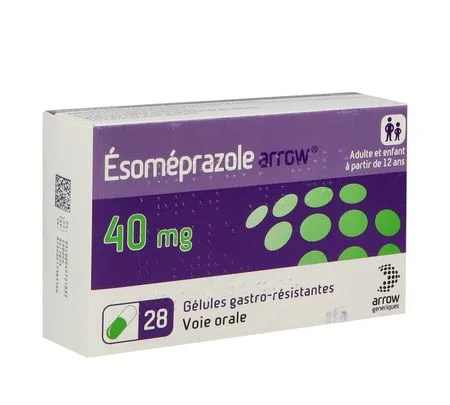
Suspensions, chewable forms and gastro-resistant preparations are more than visually different presentations. A gastro-resistant form is designed to protect its contents during passage through the stomach. Preparation, swallowing characteristics and excipients may therefore have documented particularities. In community pharmacy, formulation terminology complements the substance name. It also helps distinguish acidity-related medicines from bowel-function medicines and nutritional products described in other catalogue categories, while preserving the precise identity of the product already prescribed or required by the pharmacy team.
Frequently asked questions
Is an antacid a proton pump inhibitor?
No. An antacid neutralises acid present, whereas a proton pump inhibitor reduces acid secretion. The terms identify different mechanisms even where medicines concern related symptoms.
What does gastro-resistant mean?
It describes a formulation designed to withstand the gastric environment. It is a pharmaceutical characteristic, rather than a general claim that a medicine is gentler on the stomach.
Updated 10 November 2026
Sources and further reading