Professional product catalogue
Antiparasitics
Antiparasitics cover several medicine families according to parasite type and the site involved. Antiprotozoals, anthelmintics and agents directed at selected external parasites do not form one uniform class. This professional category explains those distinctions and the corresponding local or systemic pharmaceutical forms. A malaria medicine, a medicine for parasitic worms and a scabies preparation have different purposes despite sharing the broad term antiparasitic in health terminology. Their complete identity provides more useful information than that general label on its own.
Products in this category
81 products
 Biogaran
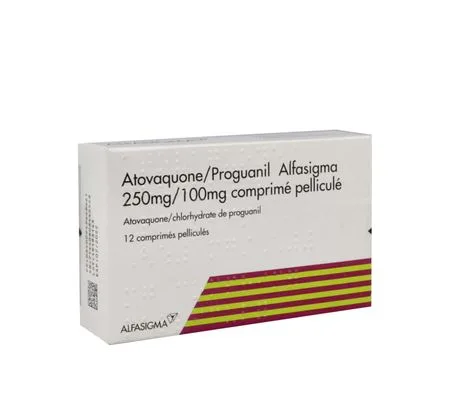
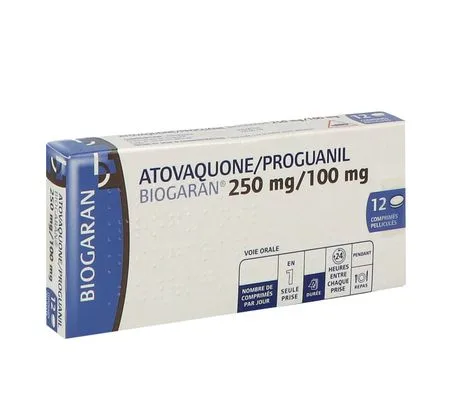
ATOVAQUONE/PROGUANIL BIOGARAN 250 mg/100 mg Film-coated tablet Blister/12
CIP / EAN : 3400927490095
- Biogaran
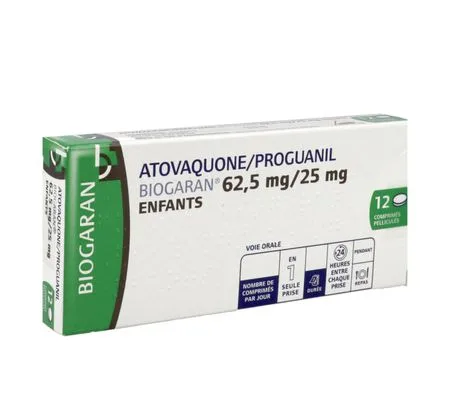
ATOVAQUONE/PROGUANIL BIOGARAN 62,5 mg/25 mg paediatric film-coated tablet Blister/12
CIP / EAN : 3400927489907
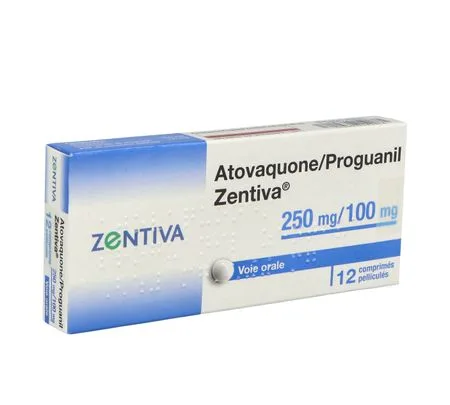
 Zentiva France
ATOVAQUONE/PROGUANIL ZENTIVA 250 mg/100 mg Film-coated tablet Blister/12
CIP / EAN : 3400927489846
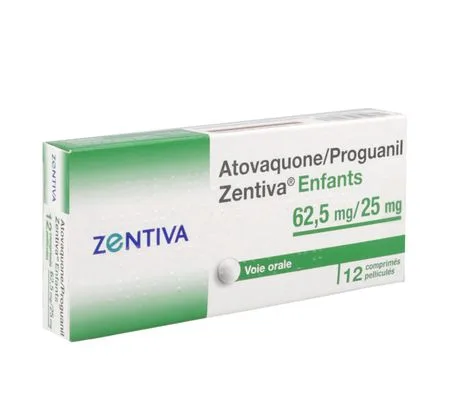
- Zentiva France
ATOVAQUONE/PROGUANIL ZENTIVA 62,5 mg/25 mg Film-coated tablet child Blister/12
CIP / EAN : 3400927489785









Understanding antiparasitics
Protozoa, worms and external parasites
Protozoa are single-celled organisms, whereas helminths are parasitic worms. Ectoparasites live on the body surface or within superficial layers. These biological distinctions help explain ATC groups including antiprotozoals, anthelmintics and ectoparasiticides. The word parasite therefore establishes neither one anatomical site nor a common medicine mechanism. Bacteria, viruses and fungi form other categories of agents and are not absorbed into these families merely because the word infection also applies. Understanding the target organism gives the category a clearer pharmaceutical scope.
Distinct pharmaceutical fields
Antimalarials illustrate part of the antiprotozoal field, while worm medicines relate to helminths. Scabies provides another setting, with medicines that can use different administration routes. These examples clarify terminology without establishing a list of available treatments or an automatic match between symptoms and products. Selected substances have several documented indications and functions depending on the molecule and presentation. Intended purpose must consequently be read together with substance, presentation and official information, rather than inferred from a broad family name or a familiar infectious disease term.
Local and systemic forms
Cutaneous preparations and oral forms have different pharmaceutical characteristics. A lotion is not another expression for a tablet, and a concentration cannot be directly compared with content per solid unit. The wider external-parasite environment can also contain products of several regulatory statuses, including repellents. This medicinal category does not turn every such product into a medicinal product. In pharmacy practice, target parasite, route, formulation and status provide more precise distinctions than a general antiparasitic description and avoid implying equivalence between preparations with different sites or purposes.
Frequently asked questions
Is a worm medicine the same as any antiparasitic?
No. The term concerns medicines against parasitic worms. Antiprotozoals and agents directed at external parasites belong to other groups.
Are all repellent products medicines?
No. Protection against parasites and vectors involves products with different statuses. Intended destination alone does not determine regulatory identity.
Updated 10 November 2026
Sources and further reading