Professional product catalogue
Opioid analgesics
Opioid analgesics act at opioid receptors involved in pain signalling. The family includes several substances and combinations, with oral, transdermal or parenteral forms according to the medicine. Immediate release, prolonged release and administration route describe different properties. Understanding those characteristics distinguishes analgesic mechanism, composition and formulation profile without reducing opioids to one medicine or comparing their labelled amounts as a universal potency scale. A shared receptor-related family therefore provides context while leaving the complete pharmaceutical identity of each preparation specific.
Products in this category
280 products
 CSP - Centre Spécialités Pharmaceutiques
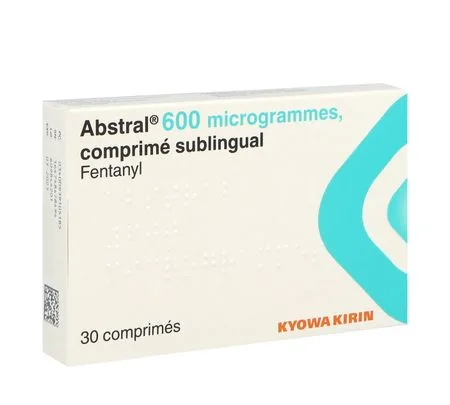
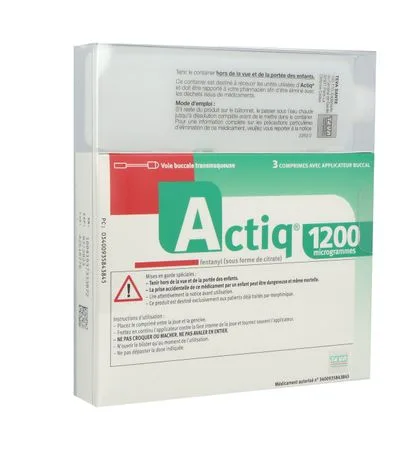
ACTIQ 1200 µg Tablet with oral applicator Blister/3
CIP / EAN : 3400935843845
- CSP - Centre Spécialités Pharmaceutiques
ACTIQ 1600 µg Tab with buccal applicator Blister/3
CIP / EAN : 3400935844217
- CSP - Centre Spécialités Pharmaceutiques
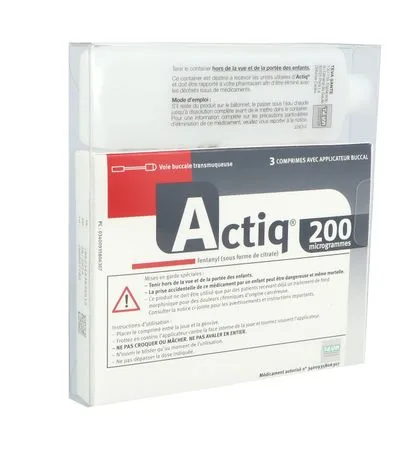
ACTIQ 200 µg Tablet with oral applicator Blister/3
CIP / EAN : 3400935806307
- CSP - Centre Spécialités Pharmaceutiques
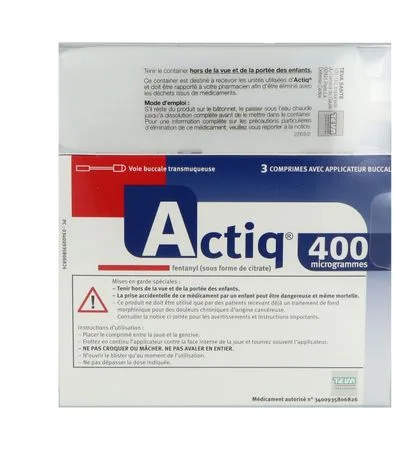
ACTIQ 400 µg Tablet with oral applicator Blister/3
CIP / EAN : 3400935806826
- CSP - Centre Spécialités Pharmaceutiques
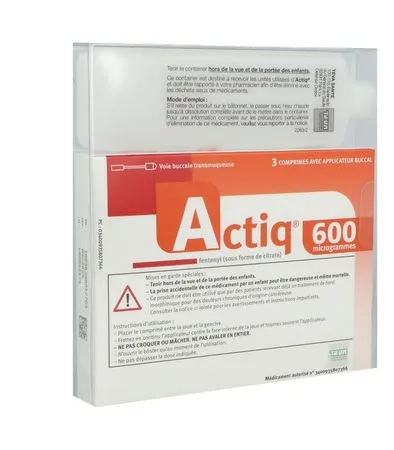
ACTIQ 600 µg Lozenge with buccal applicator Blister/3
CIP / EAN : 3400935807366
- CSP - Centre Spécialités Pharmaceutiques
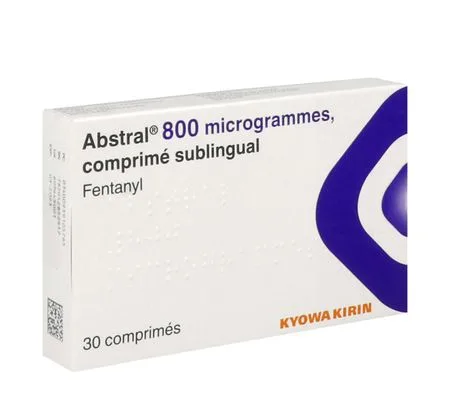
ACTIQ 800 µg Buccal tablet, blister pack/3
CIP / EAN : 3400935843494


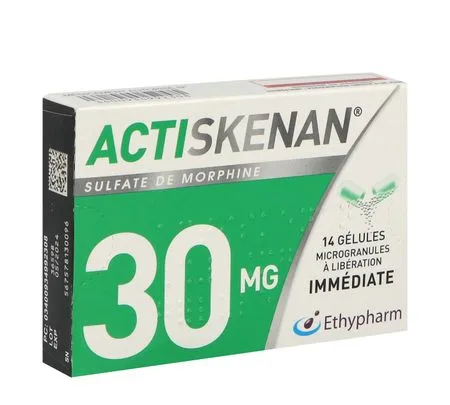
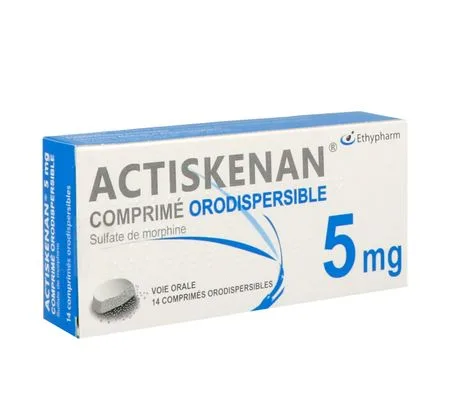
Understanding opioid analgesics
Opioid receptors and substances
Opioid describes a pharmacological relationship with receptors rather than one form or one molecule name. Substances can have different action profiles within this family. Their analgesic role differs from non-opioid medicines even where several components occur in one product. Opioid substances can also have other documented purposes according to the preparation, so the term is not synonymous with every indication of a molecule. Function, substance and formulation provide complementary information about a medicine. That distinction avoids turning the familiar family name into one uniform description of all opioid-containing preparations.
Combinations and complete composition
Selected medicines combine an opioid with a non-opioid analgesic or another active component. Each substance then contributes to the complete preparation with its own amount. Paracetamol, for example, does not by itself describe every component of a combination. A preparation containing an antispasmodic likewise brings together distinct pharmacological functions. This plurality does not establish equivalence with each ingredient taken separately. A family mechanism and a medicine's complete composition must therefore be understood separately, particularly where several familiar active names appear within one medicinal product rather than as individual references.
Release and administration routes
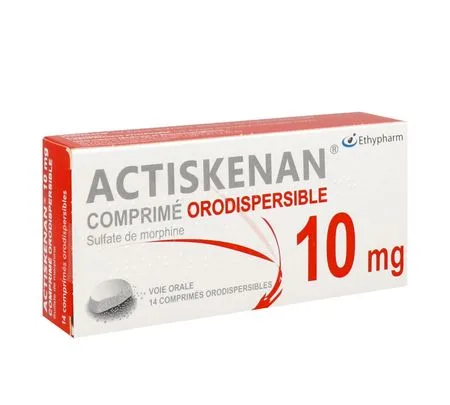
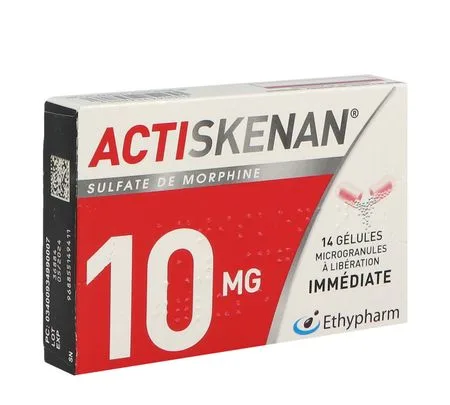
Immediate-release and prolonged-release oral forms use different designs for substance availability. A transdermal system describes delivery through the skin rather than a locally acting skin preparation. Parenteral forms retain further specific characteristics. Content per unit, concentration and any delivery rate described for a device are not identical data. Sharing an active substance consequently does not justify directly equating those expressions. Complete form properties remain essential beyond the opioid name or packaging appearance, and a change of route is not merely a different number of units of one uniform preparation.
Frequently asked questions
Do an opioid and a non-opioid analgesic have the same mechanism?
No. The families have different targets even when combined. Complete composition remains necessary to describe the medicine.
Why distinguish immediate and prolonged release?
These terms describe formulation and substance availability. Sharing an active substance name does not make presentations identical.
Updated 10 November 2026
Sources and further reading