Professional product catalogue
Rheumatology medicines
Rheumatology medicines concern several dimensions of the musculoskeletal system, including inflammation, uric acid metabolism and bone remodelling. Anti-inflammatory agents, gout medicines and osteoporosis agents have different functions. Joint, muscle and bone do not describe one tissue or one pharmacological target. This category explains those families and their forms, distinguishing action on a painful manifestation from a mechanism directed at a particular biological process. The common musculoskeletal setting does not make every medicine interchangeable or give every product associated with joints the same regulatory status.
Products in this category
825 products
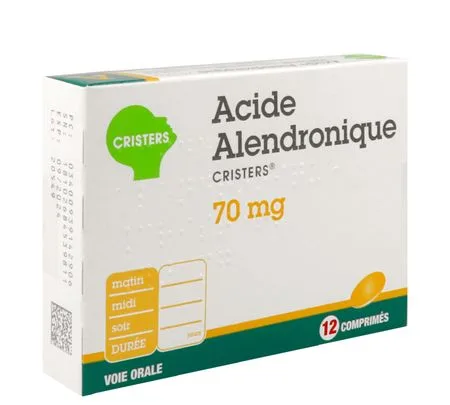
 Cristers
ACIDE ALENDRONIQUE/CHOLECALCIFEROL (VITAMINE D3) CRISTERS 70 mg/5600 UI Cpr Plq/12
CIP / EAN : 3400930109663
- Cristers
ACIDE ALENDRONIQUE/CHOLECALCIFEROL (VITAMINE D3) CRISTERS 70 mg/5600 UI Cpr Plq/4
CIP / EAN : 3400930109656
 EG Labo
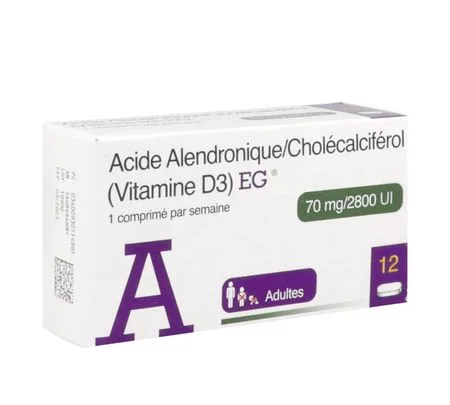
ACIDE ALENDRONIQUE/CHOLECALCIFEROL (VITAMINE D3) EG 70 mg/2800 UI Cpr Plq/12
CIP / EAN : 3400930114995
- EG Labo
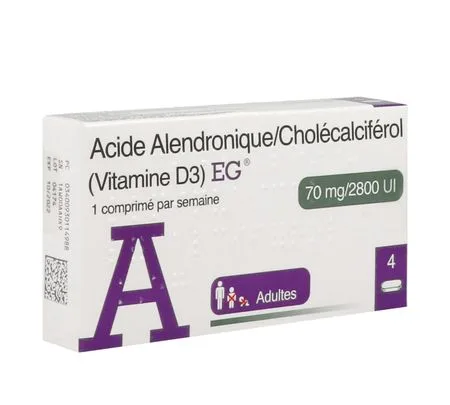
ACIDE ALENDRONIQUE/CHOLECALCIFEROL (VITAMINE D3) EG 70 mg/2800 UI Cpr Plq/4
CIP / EAN : 3400930114988
- EG Labo
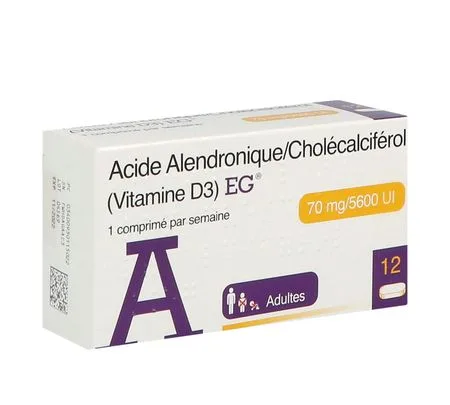
ACIDE ALENDRONIQUE/CHOLECALCIFEROL (VITAMINE D3) EG 70 mg/5600 UI Cpr Plq/12
CIP / EAN : 3400930115022
- EG Labo
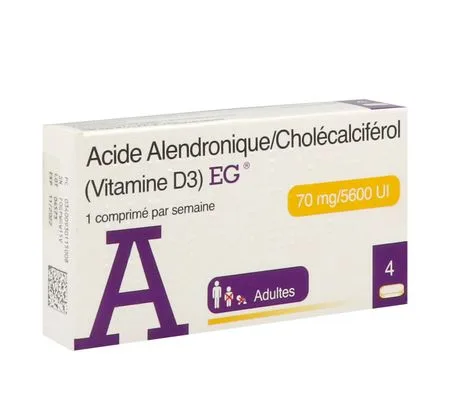
ACIDE ALENDRONIQUE/CHOLECALCIFEROL (VITAMINE D3) EG 70 mg/5600 UI Cpr Plq/4
CIP / EAN : 3400930115008
 Zentiva France
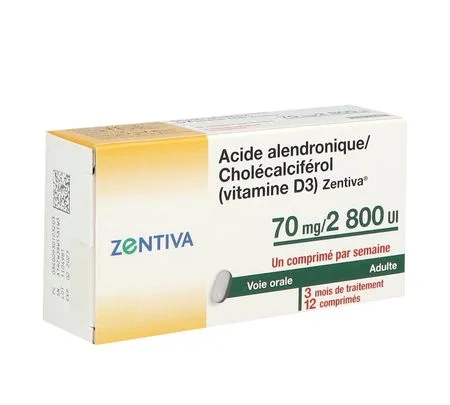
ACIDE ALENDRONIQUE/CHOLECALCIFEROL (VITAMINE D3) ZENTIVA 70 mg/2800 UI Cpr Plq/12
CIP / EAN : 3400930103203
- Zentiva France
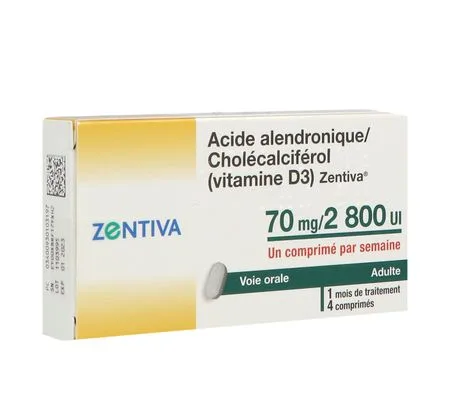
ACIDE ALENDRONIQUE/CHOLECALCIFEROL (VITAMINE D3) ZENTIVA 70 mg/2800 UI Cpr Plq/4
CIP / EAN : 3400930103197
- Zentiva France
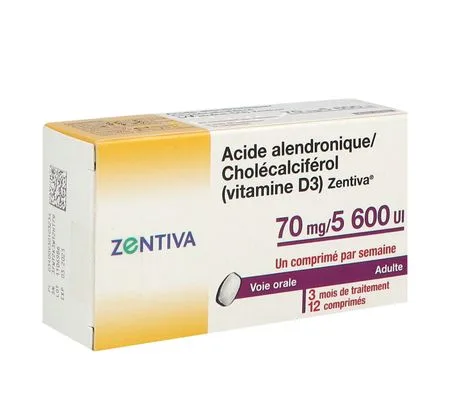
ACIDE ALENDRONIQUE/CHOLECALCIFEROL (VITAMINE D3) ZENTIVA 70 mg/5600 UI Cpr Plq/12
CIP / EAN : 3400930103234
- Zentiva France
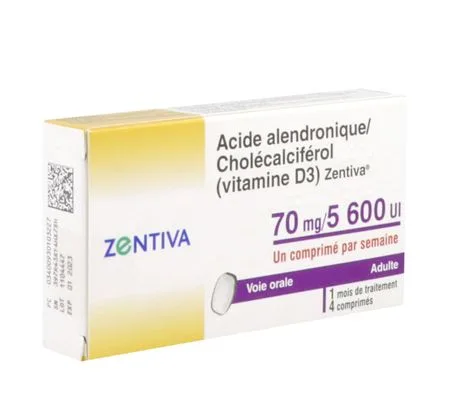
ACIDE ALENDRONIQUE/CHOLECALCIFEROL (VITAMINE D3) ZENTIVA 70 mg/5600 UI Cpr Plq/4
CIP / EAN : 3400930103227




Understanding rheumatology medicines
Pain, inflammation and bone tissue
Musculoskeletal pain can occur in many settings. Inflammation is a biological process rather than a synonym for every pain. Bone fragility, crystal deposits and joint disorders involve different mechanisms. These distinctions explain why the field contains several medicine families rather than one group of joint products. General analgesics retain their own characteristics. Selected substances used for rheumatological diseases also belong to immunological or other families without automatically becoming NSAIDs. A documented disease setting and a pharmacological mechanism therefore provide complementary information instead of one broad label that describes every medicine's function.
NSAIDs and local preparations
Non-steroidal anti-inflammatory drugs affect prostaglandin synthesis among their pharmacological actions. Systemic forms and cutaneous musculoskeletal preparations have different formulations. Non-steroidal distinguishes them from corticosteroids, whose mechanisms and use frameworks differ. Gel concentration is not a potency scale directly comparable with content per tablet. Gastro-resistant and modified-release terms describe formulation properties without promising general tolerability. Complete composition also distinguishes single-substance products from combinations in local or systemic presentations. A similar container, familiar ingredient or shared association with pain cannot establish that preparations have equivalent pharmaceutical characteristics or indications.
Gout and urate metabolism
Gout combines a setting of urate crystals with possible inflammatory manifestations. Hyperuricaemia, attacks and deposits are not three names for the same information. Colchicine concerns inflammatory processes, whereas xanthine oxidase inhibitors affect uric acid formation. Other groups may concern elimination depending on the medicine. An acute attack and a longer-term biological aim therefore remain distinct. These mechanisms explain the families without turning the category into a protocol or attributing the action of all urate-lowering medicines to an anti-inflammatory agent. The specific substance provides a more precise context than the disease name alone.
Osteoporosis and route diversity
Osteoporosis concerns bone fragility and fracture risk. Bone-metabolism agents include bisphosphonates and selected biological molecules with specific targets. Bone formation and resorption are complementary processes involving different medicine mechanisms. Oral forms, injectables and infusion preparations retain their own characteristics. Muscle relaxants and other musculoskeletal agents form further distinct families. Devices, comfort products and bone-health supplements do not become medicines through a shared destination. Their status and composition must remain identifiable alongside medicinal products, without assuming the same role from a common reference to bones, muscles or joints in product descriptions.
Frequently asked questions
Is an analgesic necessarily an anti-inflammatory?
No. Action on pain and anti-inflammatory action are different dimensions. Substance and family explain the pharmacological role.
Do gout and osteoporosis medicines share one target?
No. Urate and bone remodelling involve distinct processes. Their musculoskeletal setting does not create a common medicine function.
Updated 10 November 2026
Sources and further reading
- OMS — index ATC/DDD, M
- OMS — index ATC/DDD, M01A
- OMS — index ATC/DDD, M02A
- OMS — index ATC/DDD, M04
- OMS — index ATC/DDD, M05B
- Assurance Maladie — AINS et antalgiques, distinctions
- Assurance Maladie — Traitement de la goutte
- Assurance Maladie — Goutte et acide urique
- Assurance Maladie — Traitement de l’ostéoporose
- EMA — Romosozumab et sclérostine